2026-08-19
If you are sourcing silicone coated fiberglass fabric, the manufacturing process determines more than just price. It affects coating adhesion, thickness consistency, temperature resistance, and whether the finished material performs reliably in fire blankets, conveyor belts, or outdoor tarpaulins. In short, silicone coated fiberglass fabric is made by weaving E-glass yarn into a stable cloth, heat-cleaning that cloth, applying a formulated silicone compound, and then curing the coated fabric in a controlled oven. Each step has tolerances that a buyer should understand before comparing supplier quotes.
The base of every silicone coated fiberglass fabric is the yarn. Most industrial grades use E-glass because it offers good electrical insulation and mechanical strength at moderate cost. For special applications, S-glass or high-silica yarn is used when higher tensile strength or thermal resistance is needed, but E-glass remains the default for general-purpose insulation and fireproofing.
Yarn linear density, usually expressed in tex, controls the final fabric weight and surface texture. In a typical production line, yarns range from 68 tex to 272 tex. Coarse yarns create a stronger, more open fabric; fine yarns produce a smooth, dense fabric that is easier to coat evenly. A manufacturer must also keep yarn twist stable to avoid fuzz and broken filaments, because any loose glass fiber can turn into a pinhole after silicone coating.
Before weaving, warp yarns are wound onto beams. At our facility, Karl Mayer warping and sizing machines apply a protective size, usually starch or polymer based, to reduce abrasion during weaving. The size formulation matters because it must be completely removable during the later heat-cleaning step.
Uneven tension on the warp creates streaks in the fabric that become visible after coating. Therefore, the warping process is done with computer-controlled tension. A uniform beam is considered a prerequisite for good coating flatness.
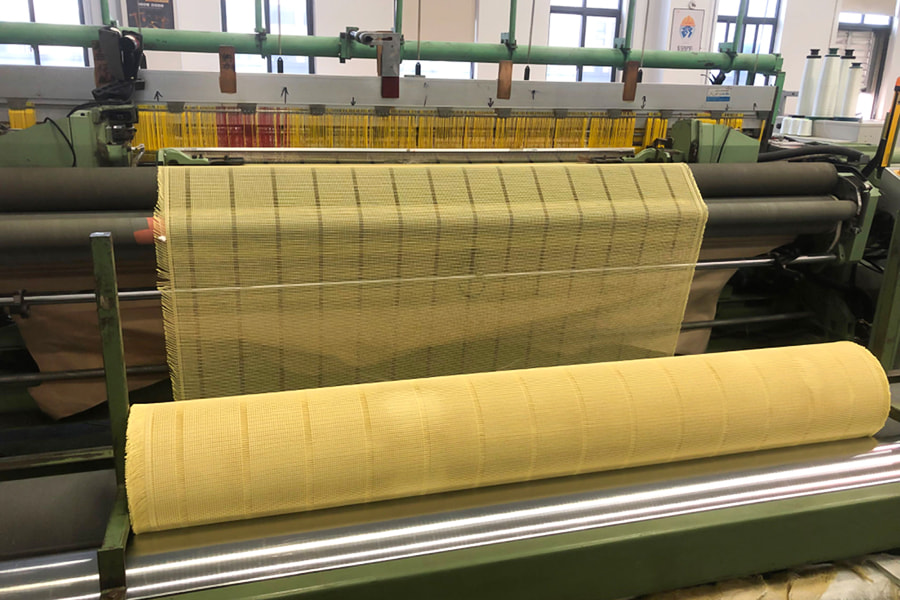
Weaving gives the fabric its dimensional stability. The most common construction is plain weave because it balances strength in the warp and fill directions. Twill and satin weaves are used for improved drape or a smoother surface when the coated fabric must wrap around curved components.
Different loom types are suited to different constructions. Air-jet looms handle light and medium weight fabrics at high speed, while Dornier rapier looms provide flexibility for heavier or complex weaves. The fabric specification is defined by weight in grams per square meter (gsm), thread count per 10 mm, and yarn type. For silicone coating, base fabric weight typically ranges from 200 to 1250 gsm.
During weaving, optical sensors and manual inspection identify defects such as warp breaks, slubs, or mispicks. A defect in the base cloth does not disappear after coating; it often becomes a weak point or a visible surface flaw. This is why many buyers ask about the fabric inspection process before ordering coated material.
A tight, uniform weave prevents excessive silicone resin from bleeding through the fabric and creating weak spots. It also determines how much silicone is absorbed by the glass yarn versus staying on the surface. Products used for fire-resistant insulation need a base fabric that can hold enough coating without becoming stiff.
Silicone does not naturally bond to glass. Therefore, the woven fiberglass must pass through a pretreatment line before coating. The process usually combines heat cleaning and chemical functionalization to create a surface that silicone can adhere to.
Heat cleaning removes sizing and organic impurities that would interfere with adhesion. Typical ovens operate at 350°C to 450°C for several minutes, depending on fabric weight. After that, the fabric is cooled and passed through a silane coupling agent bath. Silane molecules form a bridge between the glass surface and the silicone rubber, which is the basis for a strong peel bond.
Heat cleaning also relaxes internal stresses in the glass fibers. If the fabric is woven but not cleaned thoroughly, it may shrink or distort during the curing oven, leading to wrinkles or curled edges in the final roll.
The concentration of the silane bath and the drying conditions after it must be tightly controlled. Excess moisture hydrolyzes the silane prematurely and weakens adhesion. Consequently, most industrial lines include a drying chamber with IR and convection heat to condition the fabric to a target moisture level before coating.
The silicone coating is not a simple paint. The compound typically contains methyl vinyl silicone rubber, reinforcing fillers such as fumed silica, catalysts, crosslinkers, flame retardants, and pigments. The exact formulation controls hardness, adhesion, smoke generation, and long-term heat resistance.
In a well-run coating room, the compound is prepared in two stages. First, silicone rubber is mixed with fillers and additives in a high-shear mixer. Then the catalyst is added immediately before use to avoid premature vulcanization. Solvent content, if any, is adjusted to match the selected coating method.
Solvent-based silicone permits thinner coatings and deeper penetration into the fabric. Solvent-free systems are safer for workers and easier to apply in thick layers, but they require higher viscosity control. Asking a supplier whether the product is solvent-based or solvent-free is a practical way to judge manufacturing capability and product consistency.
For electrical insulation, the compound may contain halogen-free flame retardants. For applications that involve food contact, certain catalysts and plasticizers must be excluded. A manufacturer that owns its coating line can adjust these formulas without outsourcing to a third-party coater.
Once the pretreated fabric reaches the coating line, the silicone compound is applied using one of three main methods. The choice affects coating weight, surface finish, and cost.
Coating thickness tolerance is typically around +/-0.05 mm for knife-coated sheets, while dip-coated products may have slightly wider variation due to line speed and compound viscosity. If your end use is a high-temperature non-stick silicone conveyor belt, the coating has to be even across the entire width to avoid tracking problems and premature wear.
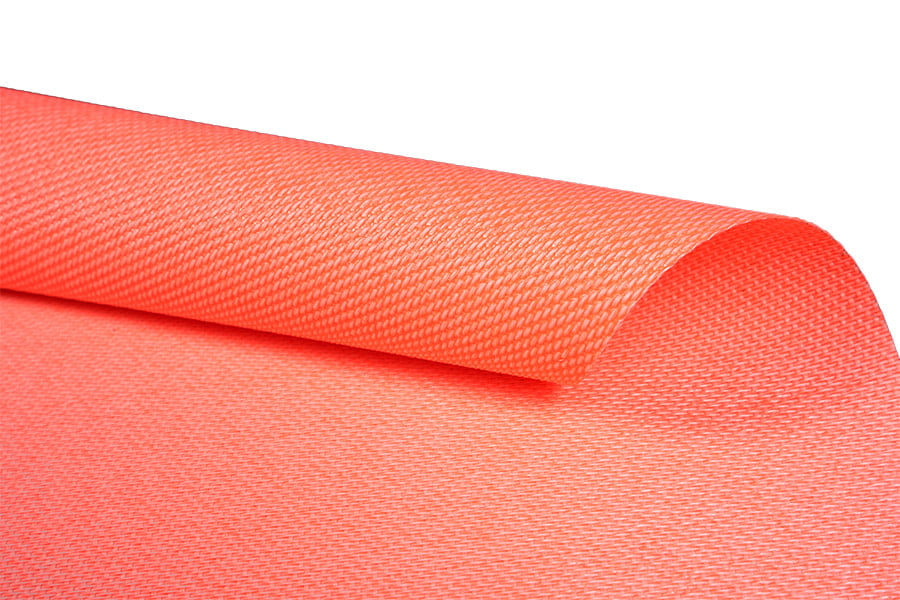 Wholesale Heat-resistant and high-temperature non-stick silicone conveyor belt SJiaxing Jiete New Material Co., Ltd China Wholesale Heat-resistant and high-temperature non-stick silicone conveyor belt Suppliers and Ex...View Product →
After coating, the fabric enters a curing oven. The silicone compound needs heat to crosslink and gain its full mechanical strength. Most lines contain several heated zones, with air temperatures ranging from 120°C to 180°C and dwell times between 2 and 8 minutes, depending on coating thickness.
During curing, solvent and reaction byproducts must be removed without creating blisters. This is why the temperature profile is as important as the peak temperature. A slow ramp at the start allows trapped air to escape before the surface skin forms.
Properly cured silicone forms a stable, flexible film that does not melt or drip under flame exposure. Crosslink density directly affects burn-through resistance, smoke generation, and the behavior of a fire blanket when it is deployed. A nontoxic silicone fire blanket only performs its extinguishing function if the cure is complete and uniform.
Wholesale Non-toxic silicone fire blanket - High temperature resistant fire suppJiaxing Jiete New Material Co., Ltd China Wholesale Non-toxic silicone fire blanket - High temperature resistant fire suppression mat Sup...View Product →
Heavy coating weights are often applied in two or more passes. The fabric passes through the coating head and oven, then is rewound and coated again. Multiple passes reduce the chance of pinholes and improve layer-to-layer adhesion. A supplier should be able to state whether its product is single-pass or multi-pass coated, because this correlates with quality and price.
Final quality checks in a silicone coated fiberglass line generally cover coating weight per square meter, thickness, tensile strength, tear strength, peel adhesion, and visual inspection. Many producers also run accelerated heat aging tests to confirm the service temperature range stated in the datasheet.
| Parameter | Common Test Method | Typical Tolerance | Why It Matters |
|---|---|---|---|
| Coating weight (gsm) | Sample cutting and weighing | +/-5% | Determines fire resistance and flexibility |
| Thickness (mm) | Dial micrometer at multiple points | +/-0.05 mm | Affects insulation value and sealing fit |
| Peel adhesion | 90° peel test of silicone film | Supplier-specific limit | Prevents delamination during flexing |
| Tensile/tear strength (N/cm) | Universal tensile tester | Varies by construction | Determines mechanical load capacity |
Coating weight is often controlled within +/-5% from roll to roll. Thickness is checked with a micrometer or an online laser gauge. Peel adhesion is measured by pulling the silicone film away from the fabric at a defined angle; low adhesion values indicate that the silane treatment or curing process is not optimized.
For outdoor applications, UV resistance and water repellency are validated with weatherometer testing. A product like an outdoor waterproof silicone tarpaulin needs a sufficiently thick coating and fully cured surface to prevent water ingress and UV degradation over long periods of exposure.
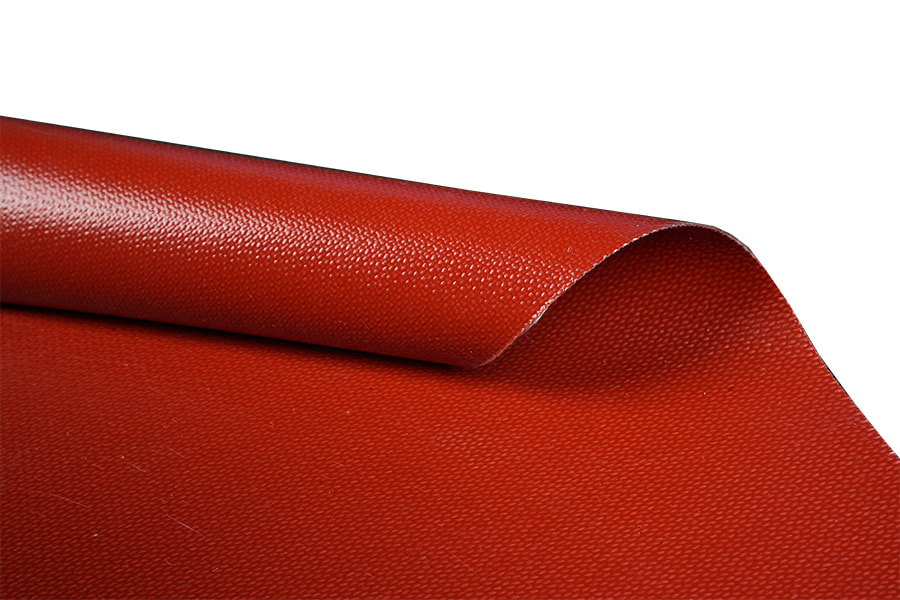 Wholesale UV resistant waterproof silicone tarpaulin - for outdoor use SupplierJiaxing Jiete New Material Co., Ltd China Wholesale UV resistant waterproof silicone tarpaulin - for outdoor use Suppliers and Exporter,...View Product →
When you compare suppliers, the manufacturing process is as important as the technical data sheet. A supplier that weaves, heat-cleans, coats, and cures under one roof can maintain tighter tolerances and respond faster to custom requirements. If a factory only buys greige fabric and outsources the coating step, it has significantly less control over adhesion and dimensional stability.
Ask for the base fabric weight, silicone formulation type, coating method, curing profile, and quality test data. A transparent manufacturer will share these details because they explain batch-to-batch variation. You should also request samples from several production runs and compare the coating thickness across the roll width, not just at the edges.
At our plant in Haining, China, we run the full line from fiberglass yarn to coated fabric, including fiberglass fabric manufacturing and silicone coating in-house. That gives us the ability to adjust construction weight, coating thickness, and formula for applications such as fire blankets, conveyor belts, insulation curtains, and outdoor tarpaulins.
Silicone coated fiberglass fabric is not a single commodity. It is a process-controlled composite. Understanding the process helps you specify the right material, avoid quality surprises, and build a supply chain that performs over time.
Recommended Products
Copyright © 2025 Jiaxing Jiete New Material Co., Ltd. All Rights Reserved.
Wholesale Wide Width Fiberglass Cloth Roll Suppliers



 English
 中文简体
中文简体