The optical advantage of black PVC coating in visibility and glare reduction
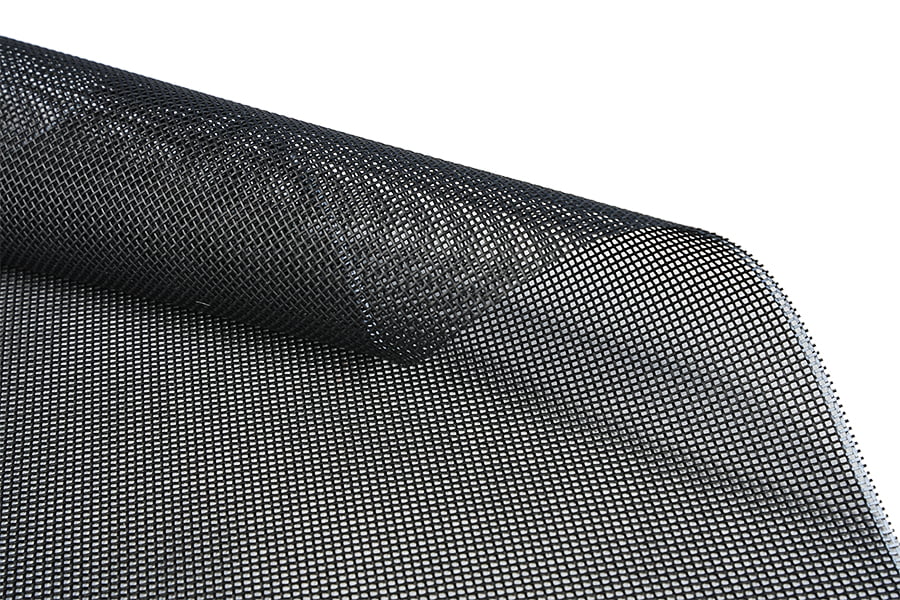
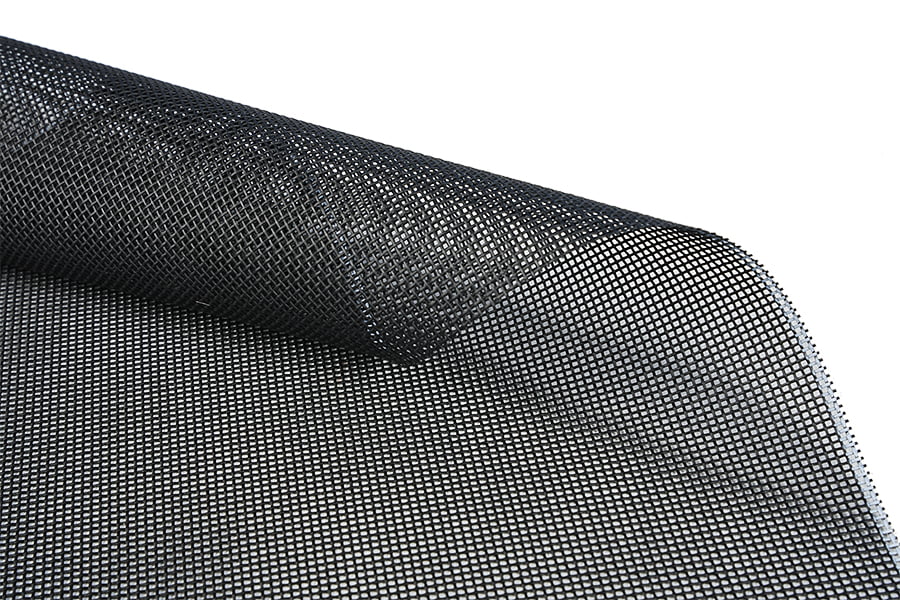
A black insect screen serves a distinct purpose beyond insect exclusion: it significantly improves outward visibility compared to light-colored meshes. The dark pigment absorbs incident light rather than reflecting it, reducing glare by up to 60% in direct sunlight. This is why architects specify black PVC-coated fiberglass screens for high-end residential window systems where preserving the view is non-negotiable. At Jiaxing Jiete New Material Co., Ltd., our black screen fabric undergoes spectrophotometer testing during production to confirm consistent opacity across every batch, with a target light transmission below 2% through the coated yarn itself.
From a psychological comfort standpoint, occupants perceive the Black PVC Insect Screen as nearly transparent when looking outward from inside a building, because the human eye naturally adjusts to the darker foreground mesh and registers the brighter exterior scene. This perceptual effect—sometimes called the "see-through" property—is measurable using a haze meter: a quality 18 × 16 mesh in black typically registers a wide-angle haze value below 12%, whereas an equivalent grey or white screen sits at 20% or higher.
PVC formulation and thermal behavior of dark-colored insect screens
The challenge with any dark-colored exterior textile is heat buildup. A black PVC insect screen can reach surface temperatures of 65–75°C under full summer sun, which places demanding requirements on the coating compound. Standard plasticized PVC begins to thermally degrade above 80°C with continuous exposure, leading to color fading, embrittlement, and eventual cracking. The solution lies in the stabilizer package: barium-zinc and calcium-zinc heat stabilizers extend the thermal life of the PVC by scavenging the hydrogen chloride released during dehydrochlorination, slowing the degradation chain reaction by a factor of three or more.
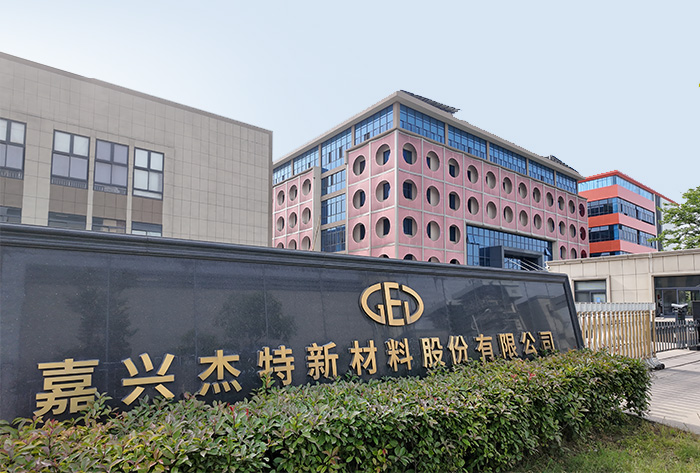
Jiaxing Jiete New Material Co., Ltd. formulates the black coating compound with an optimized ratio of primary and secondary stabilizers, plus a carbon black dispersion milled to a particle size below 0.5 µm to avoid micro-voids in the film. Post-production, every batch is tested using a xenon-arc weathering chamber per ISO 4892-2 for a minimum of 1,500 hours; the pass criterion is a Delta E color shift of less than 3.0, which is below the threshold of visual perception for most users.
Balancing mesh density, airflow, and shading performance
The most widely adopted configuration for window and door screening is the 18 × 16 mesh, which uses an 0.28 mm diameter coated yarn to create rectangular apertures of roughly 1.1 mm × 1.4 mm. This geometry blocks all insects larger than mosquitoes while keeping the airflow restriction below 20% relative to an unobstructed opening. For projects requiring partial solar shading as a secondary function, a denser 20 × 20 construction can reduce solar heat gain by an additional 8–10%, but at the cost of roughly 15% less ventilation.
Performance comparison of common black PVC insect screen mesh configurations
| Mesh Count |
Yarn Diameter (mm) |
Open Area (%) |
Airflow Restriction at 1 m/s (%) |
Solar Heat Gain Reduction (%) |
| 18 × 16 |
0.28 |
62 |
18 – 22 |
12 – 16 |
| 18 × 18 |
0.28 |
58 |
24 – 28 |
16 – 20 |
| 20 × 20 |
0.25 |
55 |
30 – 35 |
18 – 25 |
At Jiaxing Jiete New Material Co., Ltd., the warp and weft tension on our Dornier rapier looms is maintained within a 2-gram tolerance to ensure that the open area percentage does not drift more than ±1% from the design target. This level of control prevents localized tight spots where airflow would choke, or loose areas where insects could penetrate. Fabric inspection is performed under 500 lux illumination, and any section with more than three contiguous distorted openings per square meter is cut out and discarded before coating.
Long-term value and specification criteria for black PVC insect screening
When specifiers compare a Black PVC Insect Screen against polyester or plain aluminum alternatives, the total cost of ownership is the decisive factor. A PVC-coated glass fiber screen with a minimum coated weight of 100 g/m² carries a material cost roughly 20–30% higher than a standard polyester screen, but its service life in a temperate climate is 12–15 years versus 5–7 years for polyester. This life expectancy doubles the replacement cycle, eliminating one complete removal, disposal, and reinstallation cost event per building.
Jiaxing Jiete New Material Co., Ltd. supplies the black PVC screen in widths up to 2.5 meters with selvedge reinforcement, reducing the need for horizontal seams on large window walls. The recommended specification checklist includes: base fiber type (C-glass or E-glass with minimum single-filament diameter of 7 µm), coating chemistry (PVC with UV and thermal stabilizers, fungicide-treated), mesh count and open area percentage, roll width and length tolerance (±1% on length), and conformance to fire standard EN 13501-1 Class E or better. Requesting a certificate of analysis with each shipment that verifies these points ensures that site-installed screens deliver the durability, visibility, and insect exclusion performance that the specification intends.



 English
 中文简体
中文简体