Advanced tensile performance and thermal resistance in demanding environments
Para-aramid fabrics offer a specific tensile strength around 3.6 GPa, which is five times higher than steel on an equal-weight basis. This property remains stable across a broad temperature window: at 200°C the material still retains over 80% of its room-temperature strength. At Jiaxing Jiete New Material Co., Ltd., we routinely test aramid cloth in thermal cycling between -50°C and +180°C and observe less than 2% permanent elongation after 100 cycles. The low thermal shrinkage—typically below 0.1% at 150°C—makes the fabric particularly suitable for high-speed composite layup where dimensional accuracy is critical.
Unlike ceramic or metal reinforcements, aramid woven structures do not suffer from brittle fracture. They absorb energy through controlled fibrillation, providing excellent ballistic and cut resistance without the weight penalty. This ductile failure mode has been quantified in drop-tower impact tests, where a 4-layer plain-weave aramid laminate absorbs 25–30% more energy than an equivalent glass-fiber laminate.
Weave architecture and its direct effect on mechanical values
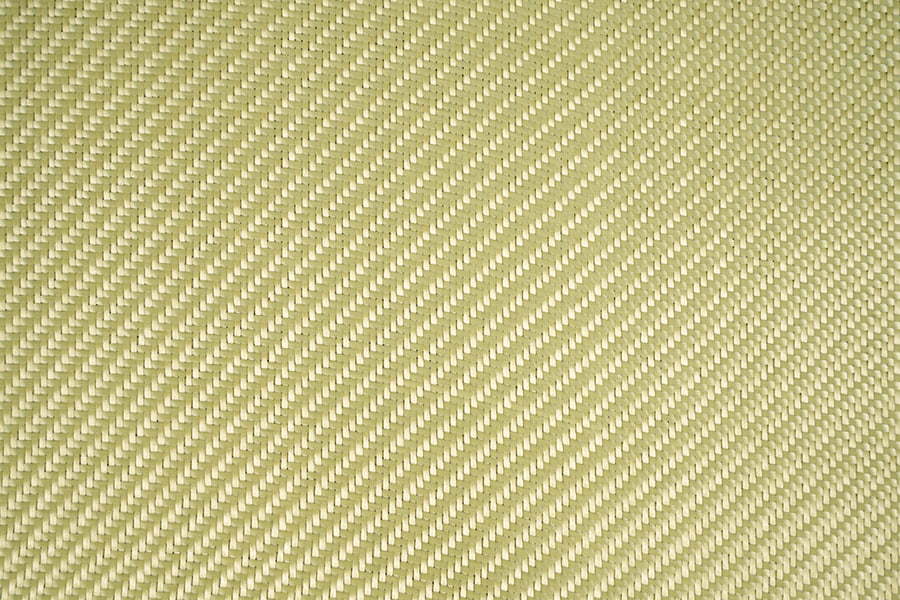
The choice between plain, twill, and satin weaves changes both the handling and the cured laminate properties of an Aramid Woven Fabric. Plain-weave constructions, with the highest number of interlacing points, deliver the best fiber alignment stability but tend to crimp the yarns, reducing translation of fiber strength into the composite by approximately 8–12% compared to a unidirectional tape. Twill 2/2 and 4-harness satin weaves relax this crimp, bringing the strength translation to within 5% of theoretical maximum while still providing manageable drapeability.
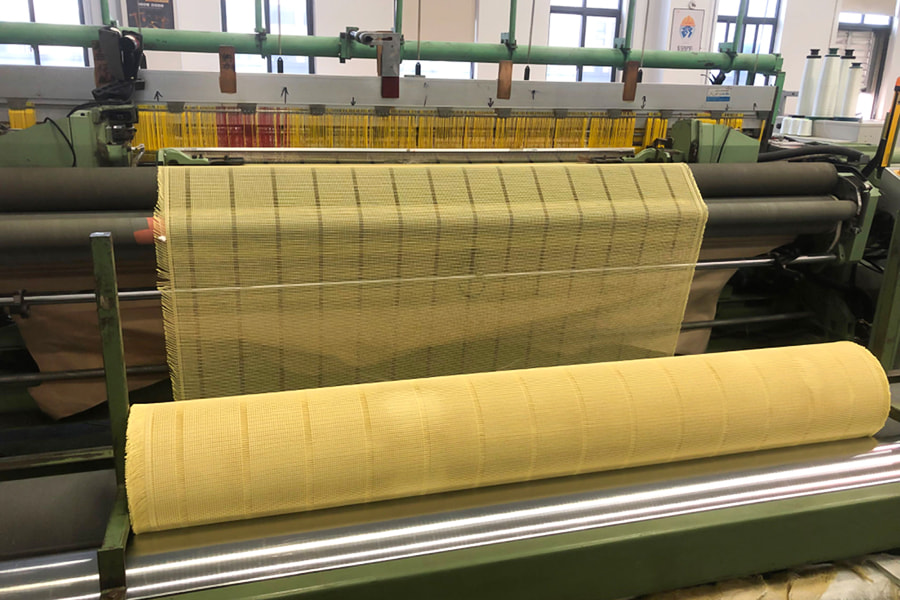
Our air-jet and rapier looms at Jiaxing Jiete New Material Co., Ltd. allow us to weave aramid yarns from 200 denier up to 3,000 denier with a warp density tolerance of ±1 thread per cm. Maintaining precise tension during weaving is essential because aramid filaments have a high modulus but low transverse compression strength; uneven tension creates permanent warp streaks that appear as resin-rich areas in the finished laminate.
- Plain weave: maximum stability, highest crimp, best for thin laminates.
- Twill 2/2: balanced drape and strength, common in ballistic panels.
- 4H satin: lowest crimp, used in curved aerospace fairings.
Surface treatment and resin compatibility for hybrid laminates
Aramid fiber surfaces are chemically inert, which often leads to poor interfacial adhesion with epoxy and vinyl ester resins unless a surface activation process is used. Corona discharge and plasma treatments increase the surface energy from below 40 dynes/cm to above 55 dynes/cm, improving interlaminar shear strength by 30–40%. When we supply Aramid Fibre Cloth for aerospace tooling, a compatible finish is pre-applied at the sizing stage to match the customer’s resin system, which reduces void content in the cured laminate to under 2%.
For hybrid stacks combining aramid with glass or carbon plies, moisture management becomes a process control point. Aramid fibers absorb up to 4% moisture by weight at 60% relative humidity, which can cause micro-voiding during high-temperature cure cycles. Pre-drying at 80°C for 2 hours brings the moisture content below 0.5% and is a standard step in our processing recommendations at Jiaxing Jiete New Material Co., Ltd.
Quality consistency and traceability in high-performance fabric supply
For industrial buyers, the three most impactful quality metrics are weight per unit area, yarn count consistency, and size residue level. A tolerance of ±3% on aerial weight (gsm) is achievable with modern weaving and finishing lines. Data from our in-house quality records at Jiaxing Jiete New Material Co., Ltd. show that the coefficient of variation for weight across a 200-meter roll can be held below 1.8%, which directly translates to uniform resin uptake in automated prepreg lines.
Full traceability back to the fiber lot is now an expected documentation standard. Each roll should come with a certificate of analysis that lists the aramid filament type, weave density, finish type, and the results of a tensile test on a representative cured laminate coupon. When evaluating suppliers, request a laminate tensile test performed to ASTM D3039 rather than relying solely on fiber vendor data, because the weaving and finishing steps introduce variables that the raw fiber specification does not capture.



 English
 中文简体
中文简体