What are the most common mesh sizes (aperture openings) for fiberglass mesh cloth and how do they affect reinforcement performance?
Selecting the correct mesh size for fiberglass mesh cloth is critical for optimizing reinforcement in construction, insulation, and composite applications. Jiaxing Jiete New Material Co., Ltd., a professional manufacturer established in 2010, specializes in fiberglass fabric products and solutions. Located in Zhijiang Industrial Park, Haining City, Zhejiang Province, the company utilizes advanced facilities including Karl Mayer warping-slashing machines, air-jet looms, Dornier rapier looms, and multiple coating machines. Below we explain the most common mesh sizes and their impact on reinforcement performance.
1. Common Mesh Sizes (Aperture Openings) for Fiberglass Mesh Cloth
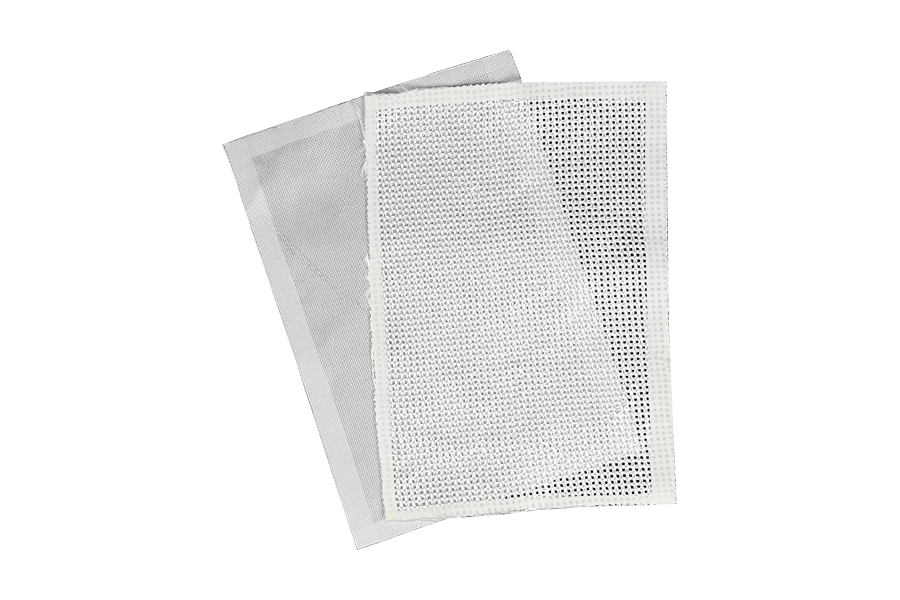
The table below lists standard mesh sizes for fiberglass mesh cloth and their typical reinforcement applications. Mesh size is typically expressed as number of openings per linear inch (or metric equivalent):
| Mesh Size (holes/inch) |
Aperture Opening (mm) |
Weight Range (g/m²) |
Tensile Strength (N/50mm) |
Typical Reinforcement Applications |
| 4 x 4 / 4 x 5 |
5 x 5 / 5 x 4 |
90 – 120 |
800 – 1000 |
Marble backing, heavy tile reinforcement, roofing membranes |
| 5 x 5 |
4 x 4 |
110 – 145 |
1000 – 1300 |
Exterior insulation finishing systems (EIFS), stucco reinforcement |
| 6 x 6 |
3 x 3 |
130 – 160 |
1200 – 1500 |
Cement boards, plaster walls, industrial flooring |
| 8 x 8 / 9 x 9 |
2.5 x 2.5 / 2 x 2 |
145 – 180 |
1400 – 1800 |
Waterproofing membranes, crack prevention in thin-layer mortars |
| 10 x 10 |
2 x 2 |
160 – 200 |
1600 – 2000 |
High-strength EIFS, heavy-duty external wall reinforcement |
| 4 x 4 (alkali-resistant coated) |
5 x 5 |
120 – 160 |
1000 – 1400 |
Marble backing, mosaic reinforcement, stone cladding |
2. How Mesh Size Affects Reinforcement Performance
- Crack Control: Smaller apertures (e.g., 8x8 or 10x10 mesh) provide more contact points with the substrate, distributing stress evenly and preventing micro-cracks in plaster, stucco, or thin mortar layers.
- Resin or Mortar Penetration: Larger apertures (e.g., 4x4 or 5x5 mesh) allow faster flow of thick materials like cement, epoxy, or adhesives, ensuring full encapsulation of fiberglass mesh cloth without air pockets.
- Adhesion Strength: Fiberglass mesh cloth with medium apertures (5x5 to 6x6) offers the best balance – enough open area for mechanical anchoring of the matrix, yet sufficient fiber density for high tensile load transfer.
- Flexibility & Conformability: Larger apertures (4x4) produce a more flexible mesh that easily wraps around curved surfaces (e.g., pipes, columns). Smaller apertures (10x10) create stiffer reinforcement better suited for flat wall panels.
- Weight vs. Strength: For a given aperture size, increasing the weight (g/m²) of fiberglass mesh cloth improves tensile strength. However, very heavy mesh with small apertures may resist mortar penetration – requiring a trade-off.
- Alkali Resistance Impact: Jiaxing Jiete New Material Co., Ltd. applies alkali-resistant (AR) coating to our fiberglass mesh cloth for cement-based applications. AR coating does not change aperture size but ensures the glass fibers retain strength in high-pH environments for decades.
3. Why Choose Jiaxing Jiete New Material Co., Ltd. for Your Fiberglass Mesh Cloth?
Jiaxing Jiete New Material Co., Ltd. manufactures fiberglass mesh cloth in all common aperture sizes on advanced Karl Mayer warping-slashing machines, air-jet looms, and Dornier rapier looms. Our product range includes fiberglass fabric, aramid fabric, PTFE architecture membrane, silicone coated fabric, PVC coated fabric, PU coated fabric, and other composite materials. We offer fiberglass mesh cloth in custom widths, roll lengths, and alkali-resistant coatings. Since 2010, scientific management and a win-win philosophy have earned us a worldwide market position.
Frequently Asked Questions (FAQ)
FAQ 1: What mesh size does Jiaxing Jiete New Material Co., Ltd. recommend for exterior insulation finishing systems (EIFS)?
Jiaxing Jiete New Material Co., Ltd. recommends 5x5 mesh (4mm aperture) or 6x6 mesh (3mm aperture) for standard EIFS applications. For high-wind or high-impact zones, we suggest 8x8 or 10x10 mesh with higher weight (160-200 g/m²). Visit our fiberglass mesh product page for detailed specifications.
FAQ 2: Does Jiaxing Jiete New Material Co., Ltd. produce fiberglass mesh cloth with alkali-resistant (AR) coating for cement reinforcement?
Yes. Jiaxing Jiete New Material Co., Ltd. specializes in AR-coated fiberglass mesh cloth for cement boards, stucco, marble backing, and tile adhesives. Our AR coating prevents alkaline degradation, ensuring >90% tensile strength retention after 28 days in saturated calcium hydroxide solution (ASTM E2485).
FAQ 3: Can Jiaxing Jiete New Material Co., Ltd. customize fiberglass mesh cloth with non-standard aperture sizes or very large widths?
Absolutely. Jiaxing Jiete New Material Co., Ltd. designs and develops fiberglass mesh cloth according to customer personality requirements. We can produce mesh sizes from 2x2 up to 12x12 holes/inch, widths from 100mm to 4000mm, and custom AR or acrylic coatings. Contact our technical team for your specific reinforcement project.
What are the different weave types (plain, leno, and semi-leno) used in fiberglass screen cloth and how do they affect insect protection and airflow?
Selecting the correct weave type for fiberglass screen cloth is essential to balance insect protection, airflow, visibility, and durability. Jiaxing Jiete New Material Co., Ltd., a professional manufacturer established in 2010, specializes in fiberglass fabric products and solutions. Located in Zhijiang Industrial Park, Haining City, Zhejiang Province, the company utilizes advanced facilities including Karl Mayer warping-slashing machines, air-jet looms, Dornier rapier looms, and multiple coating machines. Below we explain the three primary weave types for fiberglass screen cloth and how they affect performance.
1. Comparison of Weave Types: Plain, Leno, and Semi-Leno for Fiberglass Screen Cloth
The table below compares the key parameters of each weave type used in fiberglass screen cloth:
| Weave Type |
Structure Description |
Insect Protection |
Airflow Rate |
Visibility (Clarity) |
Dimensional Stability |
Typical Applications |
| Plain Weave |
Each warp fiber passes alternately over and under each weft fiber. Simple, tight, and uniform grid. |
Excellent – smallest apertures for given mesh count |
Moderate – restricted by tight weave |
Very Good – uniform openings reduce glare |
High – fibers do not shift |
Residential window screens, standard insect screening |
| Leno Weave |
Two warp fibers twist around each weft fiber, creating a locked, non-slip open structure. |
Good – slightly larger apertures than plain weave at same mesh count |
Excellent – maximum airflow due to open structure |
Moderate – twisted fibers create slight visual distortion |
Very High – prevents yarn slippage and edge fraying |
Agricultural screening, high-wind areas, large-span screens |
| Semi-Leno Weave |
Combination of plain and leno – leno edges with plain center sections, or alternating patterns. |
Good to Excellent – balanced aperture size |
Good – better than plain, less than full leno |
Good – less distortion than full leno |
High – reinforced edges prevent unraveling |
Industrial screens, door screens, heavy-use residential windows |
2. How Weave Type Affects Insect Protection and Airflow in Detail
- Insect Protection: Plain weave fiberglass screen cloth provides the highest level of insect protection because the over-under structure creates the smallest and most uniform apertures for a given mesh count (e.g., 18x16 mesh). Tiny insects like gnats and no-see-ums are blocked effectively. Leno weave has slightly larger openings due to the twisted yarn pairs, making it less effective against very small pests but still adequate for standard houseflies and mosquitoes.
- Airflow Performance: Leno weave fiberglass screen cloth offers superior airflow – typically 30-40% more air passage compared to plain weave at the same mesh count. This makes leno ideal for greenhouses, agricultural ventilation, and high-traffic door screens where air exchange is critical. Plain weave provides moderate airflow but better filtration. Semi-leno offers a balanced middle ground.
- Visibility & Light Transmission: Plain weave delivers the clearest view through the screen because the straight yarns create perfectly square, aligned openings. Leno weave can create minor visual distortion (a slight shimmer effect) due to the twisted warp fibers. Semi-leno minimizes this distortion while maintaining some airflow benefits.
- Durability & Stability: Leno weave is the most dimensionally stable – the twisted locking mechanism prevents yarns from shifting or sliding, even under high wind loads or repeated tension. Plain weave can distort under extreme tension if not properly framed. Jiaxing Jiete New Material Co., Ltd. often recommends leno or semi-leno for large-span screens or coastal areas with high winds.
- Coating Compatibility: All three weaves accept PVC or acrylic coatings. Jiaxing Jiete New Material Co., Ltd. offers fiberglass screen cloth in plain, leno, and semi-leno weaves with UV-resistant PVC coatings to prevent fading, fraying, and degradation from sunlight.
3. Why Choose Jiaxing Jiete New Material Co., Ltd. for Your Fiberglass Screen Cloth?
Jiaxing Jiete New Material Co., Ltd. manufactures all three weave types (plain, leno, semi-leno) of fiberglass screen cloth on advanced Karl Mayer warping-slashing machines, air-jet looms, and Dornier rapier looms. Our product range includes fiberglass fabric, aramid fabric, PTFE architecture membrane, silicone coated fabric, PVC coated fabric, PU coated fabric, and other composite materials. We offer fiberglass screen cloth in custom mesh counts, roll widths, and colors (charcoal, black, gray, white). Since 2010, scientific management and a win-win philosophy have earned us a worldwide market position.
Frequently Asked Questions (FAQ)
FAQ 1: What weave type does Jiaxing Jiete New Material Co., Ltd. recommend for residential window screens in hot, humid climates?
Jiaxing Jiete New Material Co., Ltd. recommends plain weave fiberglass screen cloth with PVC coating for residential windows. It provides maximum insect protection, good clarity, and resists corrosion in humid environments. For areas requiring higher airflow (e.g., screened porches), we suggest semi-leno weave. Visit our product page for mesh count options.
FAQ 2: Does Jiaxing Jiete New Material Co., Ltd. produce anti-ultraviolet (UV) fiberglass screen cloth for long-term outdoor use?
Yes. Jiaxing Jiete New Material Co., Ltd. applies UV-stabilized PVC or acrylic coatings to all our fiberglass screen cloth weaves. This prevents fading, embrittlement, and loss of tensile strength even after years of direct sunlight exposure. Our coated leno and plain weave screens are widely used in coastal resorts and agricultural greenhouses.
FAQ 3: Can Jiaxing Jiete New Material Co., Ltd. customize fiberglass screen cloth with non-standard mesh counts or very wide rolls?
Absolutely. Jiaxing Jiete New Material Co., Ltd. designs and develops fiberglass screen cloth according to customer personality requirements. We can produce mesh counts from 10x10 to 24x24, widths up to 3000mm, and any combination of plain, leno, or semi-leno weave. Contact our technical team for custom insect screening or agricultural shading solutions.



 English
 中文简体
中文简体