2026-11-06
A 160 g/m2 mesh roll and a 165 g/m2 mesh roll can both be quoted as standard 5 x 5 mesh, and only one of them will run cleanly through your coating line.
Bulk mesh procurement fails in small, predictable ways. The areal weight is agreed without a tolerance. The mesh count is left to the mill's discretion. The coating is named but never weighed. Roll length is assumed to be 100 m because that is what the last shipment contained. Every one of those gaps is free to close at the RFQ stage and expensive to close after the container is unloaded.
Four numbers carry most of the commercial weight in this category, which is why they belong in the quotation line and not in a conversation.
A mesh roll is fully specified by four values: areal weight, mesh count, coating type with add-on weight, and roll geometry. A purchase order that omits any one of them moves the risk of a wrong material from the mill to the buyer.
| Parameter | Unit | Typical band | Verification | Procurement risk |
| Areal weight | g/m2 | 60-300 | Mass per unit area to ISO 3374 | A roll can hit the weight and still miss the tensile target |
| Mesh count and aperture | per inch or mm | 4 x 4 to 10 x 10 per inch | Optical count plus strip tensile to ISO 4606 | Resin and coating penetration change with aperture width |
| Coating type and add-on | g/m2 per side, or percent of fabric mass | Set by grade, not by coating category | Loss on ignition to ASTM D4963 for the organic fraction | A stated temperature ceiling means nothing without the coating weight behind it |
| Roll geometry | mm width x m length | 1000-2000 mm x 50-200 m | Physical measurement on the first roll of each pallet | Edge trim waste and extra handling at the cutting line |
If the mesh will sit inside cement, render or a concrete panel, the glass chemistry outranks the weave. Alkali-resistant grades depend on a zirconia content of roughly 16 percent or more to hold tensile strength in the alkaline pore water of curing cement, while standard E-glass loses a substantial part of its strength in the same environment. Specify AR glass by name and ask for retained-strength data, as the alkaline resistant fiberglass cloth roll range is engineered for exactly that condition.
Areal weight is the fastest filter in a mesh catalogue. Below 100 g/m2 you are buying a light reinforcement or a screen; above 200 g/m2 you are buying a structural carrier that happens to have openings in it.
| Areal weight | Typical mesh count | Where it is used | Coating note |
| 60-80 g/m2 | 8 x 8 to 10 x 10 per inch | Insect screening, filtration backing, thin laminate carrier | Low add-on preserves airflow and open area |
| 110-160 g/m2 | 6 x 6 to 8 x 8 | Plaster and render reinforcement, joint tape, general industrial mesh | AR glass for cementitious systems; silicone or PVC for flexible covers |
| 165-200 g/m2 | 5 x 5 to 6 x 6 | Stucco reinforcement, concrete panel mesh, filtration media | AR glass with acrylic sizing, or vermiculite where radiant heat is present |
| 250-300 g/m2 | 4 x 4 to 5 x 5 | Heavy reinforcement, conveyor backing, composite carriers | PTFE or silicone shields the weave at continuous temperature |
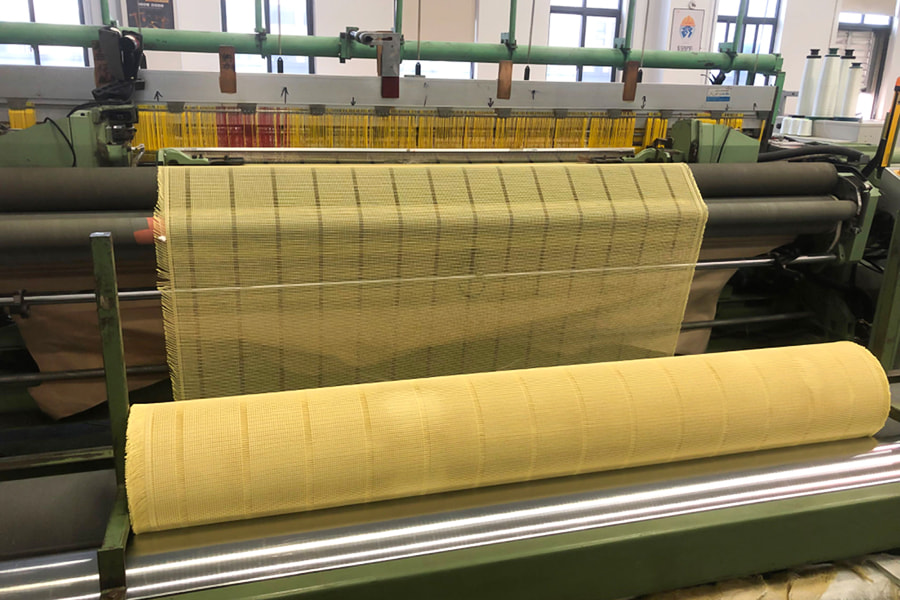
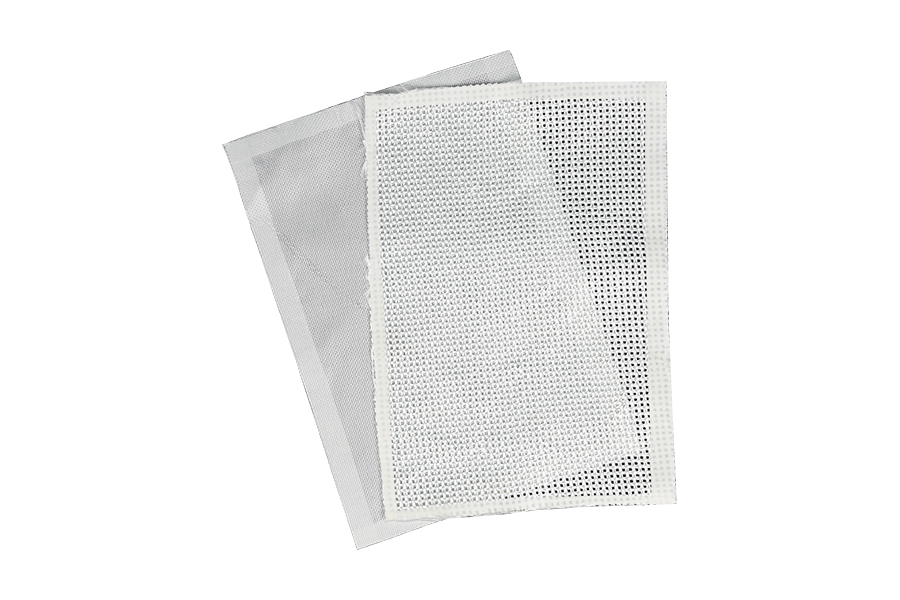 Custom Fiberglass Mesh and Screen ClothCustomizable mesh and insect screen cloth with 90–200 g/m² weights, varied weaves and coatings; compare tensile breaking force rather than areal weight alone.View Product →
Two rolls at 160 g/m2 are not the same product. Tensile breaking force depends on yarn linear density, ends and picks per centimetre, crimp and weave construction. Ask for strip-method breaking force in warp and weft, tested to ISO 4606 or ASTM D579, and treat areal weight as a purchasing convenience rather than a performance rating.
Match the coating to the continuous service temperature rather than the peak: typical continuous ceilings are about 260 °C for PTFE, 200-230 °C for silicone, 90-120 °C for polyurethane and 70-105 °C for PVC, and unit cost generally falls with the temperature class.
Those bands are typical published values for coated fiberglass fabric. The exact ceiling depends on the formulation, the substrate and the coating weight, so the supplier data sheet governs the order.
Above the temperature question, the coating decides how the fabric behaves chemically and mechanically, and the two high-temperature families are not interchangeable.
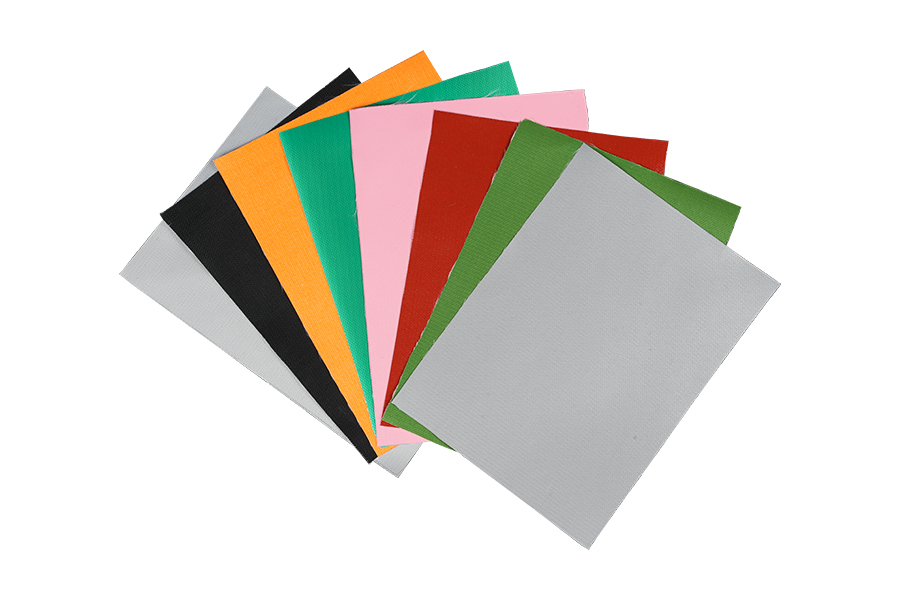
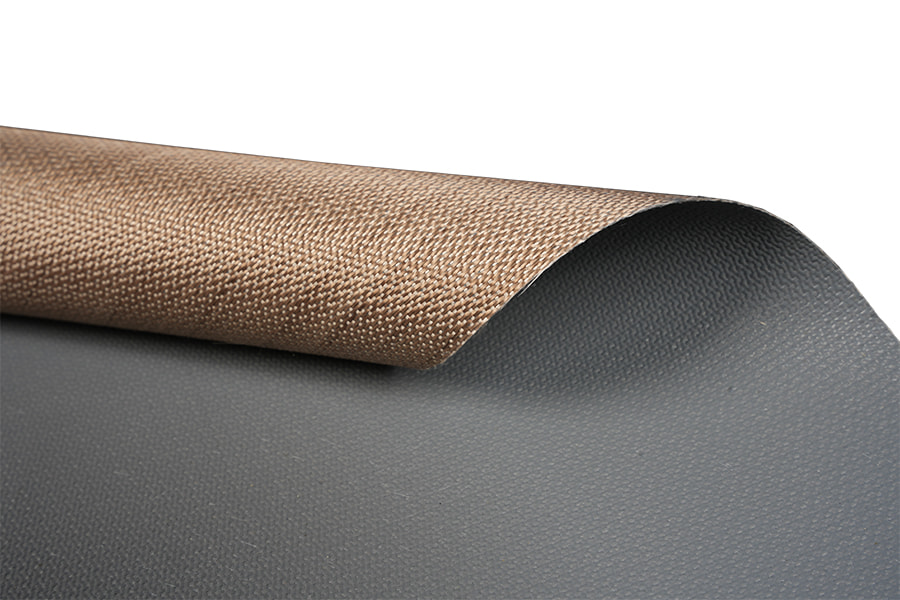 PTFE-Coated Fiberglass Fabric for High-Temperature UseGlass fabric impregnated with PTFE for -70 to 260°C service, chemical resistance, non-stick surfaces and dimensional stability; worth reviewing when high-temperature performance matters.View Product →
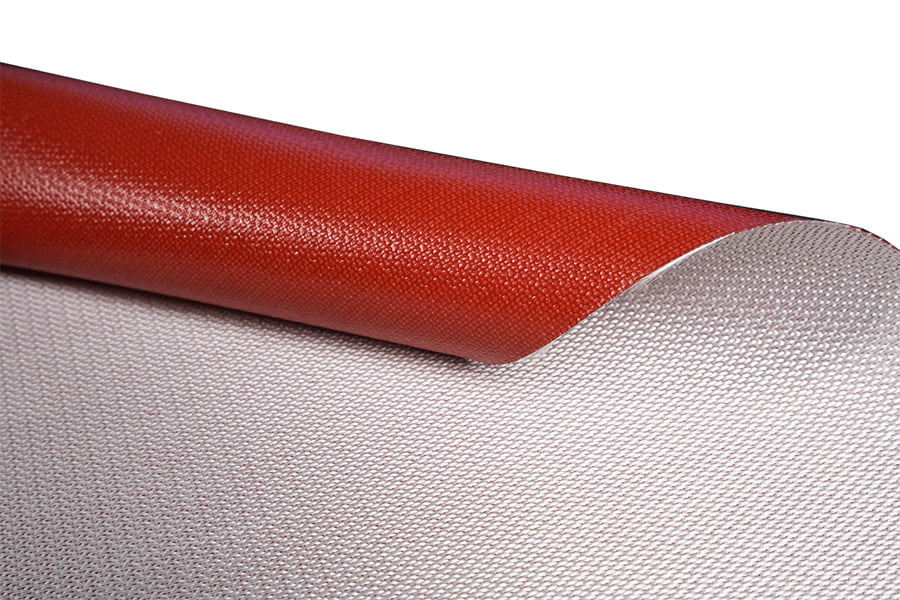 Silicone-Coated Fiberglass Fabric for Electrical InsulationFiberglass fabric with silicone coating for -70 to 260°C, electrical insulation and flame retardancy; available in multiple weights and one- or two-side coatings.View Product →
For cost-driven work, PVC and polyurethane cover the low-temperature end. PVC dominates tarpaulins, insect screen and blackout curtain fabric. Polyurethane is chosen where tear strength and waterproofing matter more than heat resistance. Neither should be specified above 120 °C continuous, and PVC needs UV stabilisation for outdoor service.
In bulk orders, container cube rather than weight usually sets the shipment, so roll diameter, core size and pallet pattern influence landed cost more than the fabric itself.
A mesh roll's geometry is defined by four values: width, length, core inner diameter and outside diameter. Standard cores run 76 mm, while 152 mm cores are common for heavier coats where winding tension would otherwise crush the roll.
The practical consequence is that a small reduction in roll outside diameter changes how many pallets a container accepts, which changes freight per square metre without touching the fabric price.
Release a mesh batch on documents plus measurements: a certificate of analysis, a roll-by-roll weight and length schedule, a coating declaration, and a retained 1 m sample from each production lot.
Landed cost on a bulk mesh order is set by coating class, roll geometry and freight cube, in that order. Fabric weight is usually the smallest of the three levers, which is why buyers who negotiate only on g/m2 leave most of the spread on the table.
Four questions account for the remaining difference between one quotation and another.
No. Tensile breaking force depends on yarn linear density, weave construction and ends and picks per centimetre, not on areal weight alone, so two rolls at 160 g/m2 can differ in warp breaking force. Require strip-method values in both directions, tested to ISO 4606 or ASTM D579, and compare those figures rather than the weight.
Because coating add-on is not standardised. A light PTFE add-on and a heavy PTFE add-on on the same greige fabric are different products with different temperature resistance, surface friction and cost. Ask for add-on weight in g/m2 per side, or the coating percentage of fabric mass, and compare quotations on that basis.
In metres, with weight as a secondary check. Coating add-on changes the weight of a fixed length, so a 100 m roll of the same weave can legitimately weigh different amounts across coating batches. Specify length as the primary unit and set a weight tolerance band as the verification tool.
Ask for the lead time to be split into three stages: greige fabric production, coating, and packing and palletising. A single lead time figure hides the coating queue, and for PTFE and silicone work that queue is normally the longest of the three stages.
Recommended Products
Copyright © 2025 Jiaxing Jiete New Material Co., Ltd. All Rights Reserved.
Wholesale Wide Width Fiberglass Cloth Roll Suppliers



 English
 中文简体