Para-Aramid vs. Meta-Aramid: Choosing the Right Fibre for the Job
Aramid fibres split into two commercially important families, and the distinction between them is not merely chemical — it determines which performance envelope a finished cloth can achieve. Para-aramid (typified by Kevlar® and Twaron®) aligns its polymer chains along the fibre axis, producing tensile strength approximately 5 times that of steel at the same weight and exceptional resistance to ballistic impact. Meta-aramid (typified by Nomex®) adopts a kinked chain arrangement that sacrifices tensile strength in favour of outstanding thermal stability and flame resistance — it does not melt or drip at temperatures below approximately 370 °C.
For buyers evaluating High Performance Aramid Fibre Cloth, this distinction shapes the specification conversation from the outset. Ballistic panels, cut-resistant gloves, and structural composite reinforcement are para-aramid territory. Proximity suits, industrial filter bags operating above 200 °C, and aircraft interior panels where fire containment is primary are better served by meta-aramid constructions. Hybrid weaves combining both fibre types are also available where both thermal and mechanical demands must be met simultaneously.
Neither fibre type offers broad UV resistance — prolonged outdoor exposure degrades tensile properties in both families — so protective coatings or secondary laminates are standard practice for any aramid product intended for extended exterior use. Jiaxing Jiete New Material Co., Ltd. addresses these requirements through its coating machinery lines, allowing surface treatments to be applied directly to aramid-based substrates without outsourcing the process.
Weave Architecture and Its Impact on Composite Reinforcement Performance
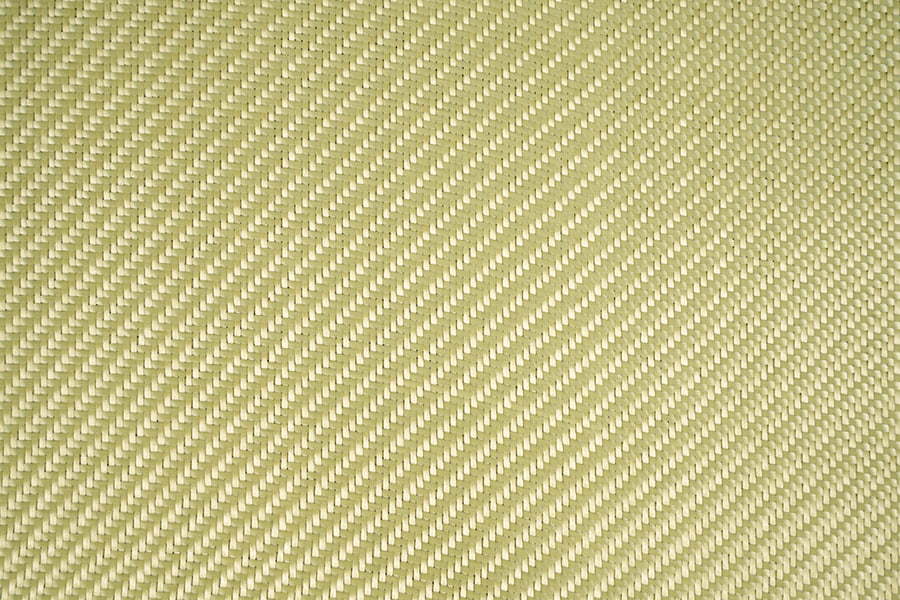
When aramid cloth is used as a reinforcement layer in resin matrix composites, the weave architecture directly governs how load is distributed through the finished laminate. Plain weave offers maximum inter-yarn contact and good dimensional stability during lay-up, making it the preferred choice for complex curved geometries where the fabric must conform without bunching. Twill weave sacrifices some dimensional stability for improved drapeability and a higher fibre volume fraction, which translates into better in-plane mechanical properties in flat or mildly contoured panels.
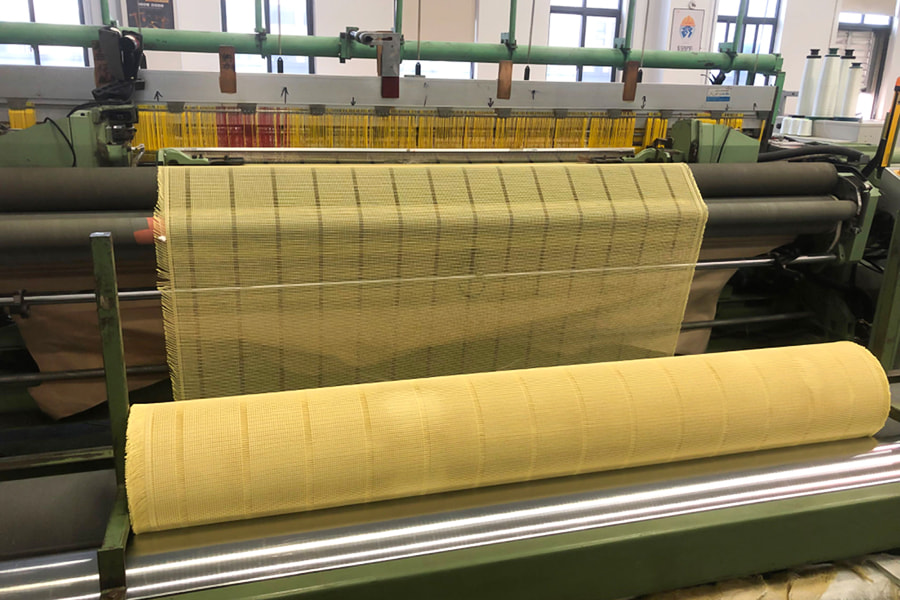
Mesh-format aramid fabrics represent a distinct category: rather than a closed weave, an open lattice structure is locked with a resin binder at each intersection. This format is used where the primary need is crack bridging and tensile reinforcement within a cementitious or thermoplastic matrix, not load-bearing in isolation. The open structure allows the host matrix to penetrate and encapsulate the fibre network, producing strong mechanical interlock between reinforcement and matrix.
| Weave Format |
Drapeability |
Fibre Volume Fraction |
Primary Application |
| Plain weave |
Moderate |
Moderate |
Complex-curved laminates, protective panels |
| Twill weave |
High |
Higher |
Flat structural panels, high-performance sports equipment |
| Open mesh / grid |
Very high |
Lower (by design) |
Matrix reinforcement, crack suppression in composites |
Comparison of common aramid cloth weave formats and their composite reinforcement characteristics
Specifying the correct format at the design stage avoids costly rework. Substituting a plain weave for a mesh reinforcement in a cementitious application, for example, will impair matrix penetration and reduce the bonding area that gives the composite its crack-bridging capability.
Thermal Protection Standards and What They Mean for Material Selection
Protective clothing and equipment made with aramid cloth must be evaluated against specific test standards before deployment in regulated industries. In Europe, EN ISO 11612 governs heat and flame protective clothing, classifying fabrics across multiple performance levels: A (limited flame spread), B (convective heat), C (radiant heat), D (molten aluminium splash), E (molten iron splash), and F (contact heat). A garment destined for foundry work needs a combination of these ratings, not simply a broad "fire resistant" claim.
In North America, NFPA 2112 and NFPA 70E set the benchmark for flash fire and arc flash protection respectively. The key performance metric under NFPA 2112 is the Heat Transfer Performance (HTP) value — the amount of incident thermal energy transmitted through the fabric to the wearer — expressed in cal/cm². Fabrics achieving HTP values below 6.0 cal/cm² qualify for NFPA 2112 certification. Meta-aramid fabrics with fabric weights in the range of 150–200 g/m² typically meet this threshold, while heavier constructions provide additional margin for higher-risk environments.
Buyers sourcing aramid cloth for protective applications should always request full certification documentation tied to the specific fabric construction being purchased — not generic brand certifications. Fabric weight, yarn linear density, and finishing treatments all affect test outcomes, so a certificate issued for one construction does not automatically cover a lighter or differently finished variant of the same product family.
Processing Considerations: Cutting, Joining, and Long-Term Storage
Aramid fibres are notoriously difficult to cut with conventional scissors or rotary blades due to their high tenacity and low compressibility. Industrial cutting of High Performance Aramid Fibre Cloth is typically performed with ceramic-coated or carbide shear blades rather than standard steel, or with automated ultrasonic cutting systems that sever the yarns through localised vibration rather than mechanical shear. Laser cutting is effective for thin fabrics but generates combustion by-products that require adequate ventilation and can leave a slightly hardened edge that affects resin wet-out in composite applications.
Seam integrity in finished aramid products is also a distinct challenge: the same low surface friction that contributes to yarn mobility in weaving makes standard lock-stitch seams prone to pull-through under impact loads. Double-stitched seams with high-tenacity aramid thread and, where possible, bonded seam tape are the industry standard for load-bearing applications. For non-structural applications such as filtration panels, conventional stitching with heat-resistant polyester thread is acceptable and more cost-effective.
Storage conditions matter more for aramid than for most industrial textiles. Both para- and meta-aramid fabrics absorb atmospheric moisture, which reduces tensile properties by up to 15% at saturation compared to bone-dry conditions. Rolls should be stored horizontally in sealed polyethylene wrapping, away from UV sources, at relative humidity below 60%. We supply all aramid fabric rolls in sealed packaging to maintain fibre condition during transit and warehousing, reflecting the careful inventory practices built into our production workflow over more than a decade.



 English
 中文简体
中文简体