2026-07-30
The performance of fiberglass cloth rolls is determined long before the fabric reaches a composite production line. Raw material selection, fiber drawing precision, sizing chemistry, and weaving control each shape the mechanical properties of the finished roll. This article walks through the full manufacturing sequence and explains why each stage matters for industrial-grade fiberglass fabric.
Fiberglass cloth rolls are produced by melting mineral raw materials into glass, drawing the melt into continuous filaments, applying a protective sizing, and weaving the resulting yarns into fabric under controlled tension and inspection.
Producing consistent, industrial-grade fiberglass cloth requires tight control across nine distinct production stages, from raw material batching through final packaging.
Silica sand, limestone, alumina, boric compounds, and other mineral additives are blended in precise proportions to set the glass composition. Accurate batching supports consistent fiber quality, mechanical strength, and thermal performance downstream.
The raw material blend is fed into high-temperature furnaces where it melts into a homogeneous glass. Careful temperature control at this stage minimizes impurities and keeps the melt stable enough to draw into continuous fiber.
Molten glass flows through precision bushings containing hundreds to thousands of fine holes, and is rapidly drawn into continuous filaments. Fiber diameter is monitored closely, since it directly affects the tensile strength and flexibility of the finished cloth.
Freshly drawn filaments receive a protective sizing coating that improves handling, protects fibers during processing, and enhances compatibility with epoxy, polyester, or vinyl ester resin systems.
Individual filaments are gathered and wound into yarns under controlled thickness, twist level, fiber alignment, and winding tension, producing the uniform yarn needed for stable weaving performance.
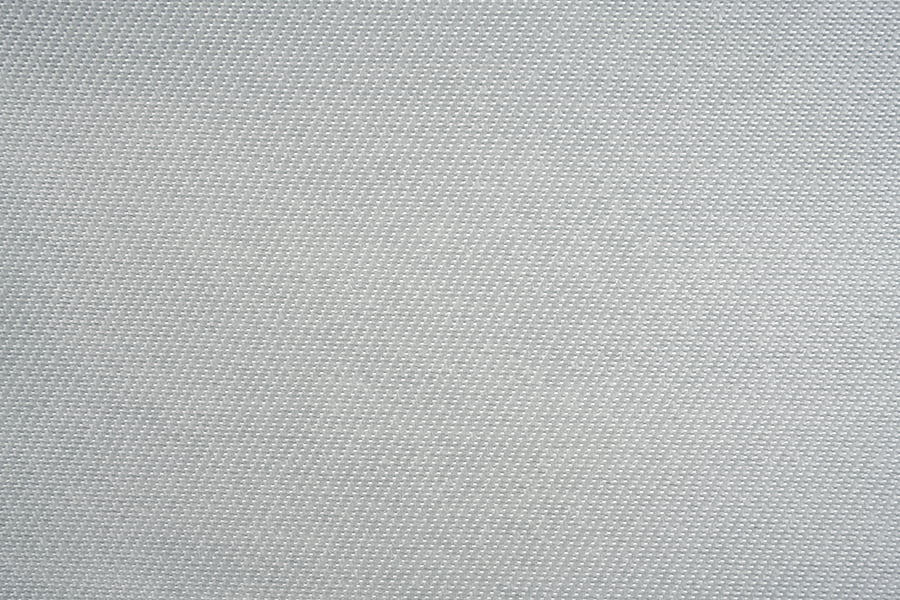
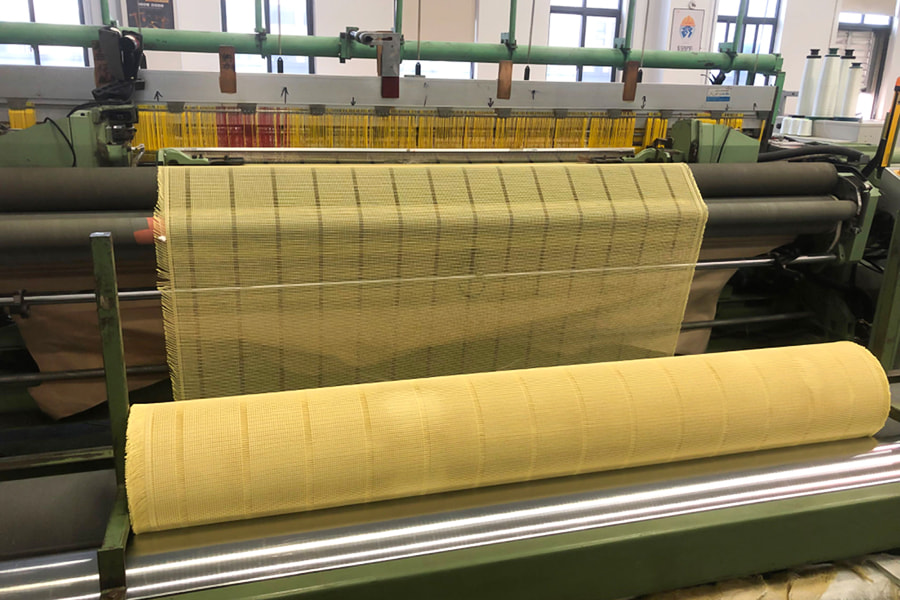
Glass fiber yarns are woven into fabric on industrial weaving machines. The weave pattern selected at this stage sets flexibility, strength distribution, and surface finish for the finished roll.
Depending on the target application, woven fabric may undergo heat cleaning, surface coating, or chemical finishing to improve resin wet-out, adhesion, and overall composite manufacturing performance.
Before packaging, every roll is checked against fabric weight, thickness, tensile strength, weave consistency, and surface appearance criteria, with sampling tests confirming compliance with internal and customer specifications.
Inspected fabric is wound into rolls to the specified width, length, and core size, then protected with wrapping suited to transportation and storage conditions, including export packaging where required.
The weaving stage determines which of three common patterns the finished fabric will carry, each suited to a different manufacturing outcome.
Balanced strength and high dimensional stability with a smooth surface, suited to general composite panels and electrical insulation parts.
Better flexibility and drapability, allowing the fabric to shape around curves for marine and automotive components.
Excellent conformability for complex geometries, commonly selected for aerospace parts and wind turbine blades.
Consistent fiberglass cloth depends on measuring the same set of specifications on every production run before a roll is approved for packaging.
The manufacturing precision described above supports fiberglass cloth across a wide range of industrial end uses.
In marine applications, fabric resists moisture and saltwater exposure across boat hulls and deck structures. In construction, it reinforces structural repair and waterproofing systems. Automotive manufacturers use it to reduce body panel weight, and wind energy producers rely on it as a core reinforcement in turbine blade manufacturing.
Confirm sizing chemistry against the resin system planned for production, since mismatched sizing slows resin wet-out and weakens bonding.
Request sample inspection data for fabric weight and tensile strength before committing to large-volume orders.
Match roll width and core size to existing production line equipment to reduce material handling waste.
Reliable fiberglass cloth production depends on advanced fiber drawing and weaving equipment, systematic inspection of fiber quality and fabric weight, customization support for widths and weave patterns, and technical guidance on material selection and process recommendations.
Automated production continues to improve manufacturing precision and consistency, while newer sizing technologies strengthen resin bonding and composite performance. Manufacturers are also investing in energy-efficient furnaces and waste reduction, alongside growing demand for fabrics customized for wind energy, marine engineering, electric vehicles, and infrastructure projects.
Every stage of this process, from raw material batching through final packaging, determines whether a finished roll of fiberglass cloth rolls performs reliably once it reaches a composite production line.
 |
 |
They are made from continuous glass fibers produced by melting mineral-based raw materials and drawing the melt into fine filaments before weaving them into fabric.
Sizing protects fibers during processing and improves compatibility with resin systems, enhancing bonding strength and overall composite performance.
Plain weave, twill weave, and satin weave are the most common patterns, each offering a different balance of flexibility and strength.
Manufacturers inspect fabric weight, thickness, tensile strength, weave consistency, dimensions, and surface appearance before packaging every roll.
Recommended Products
Copyright © 2025 Jiaxing Jiete New Material Co., Ltd. All Rights Reserved.
Wholesale Wide Width Fiberglass Cloth Roll Suppliers



 English
 中文简体
中文简体