Material engineering behind long-term weather resistance
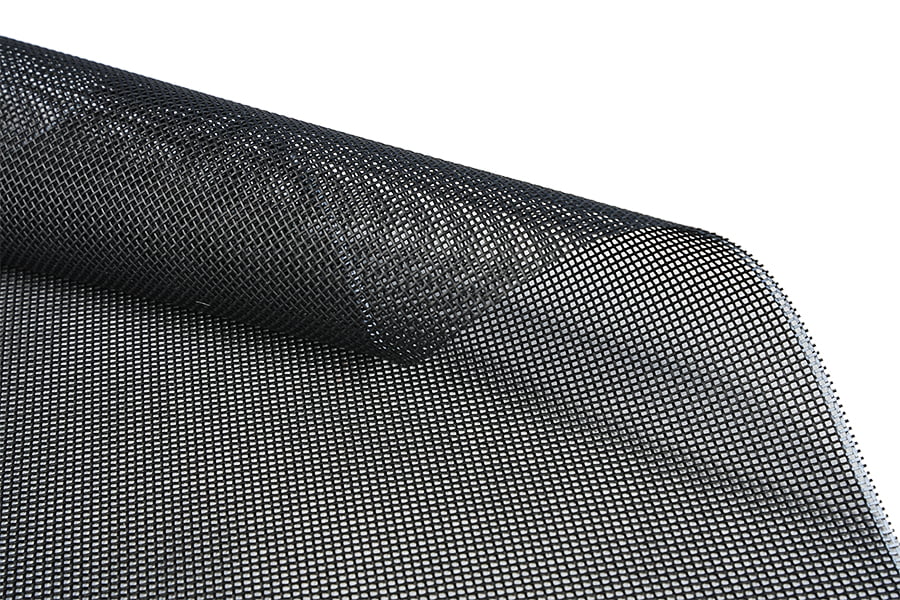
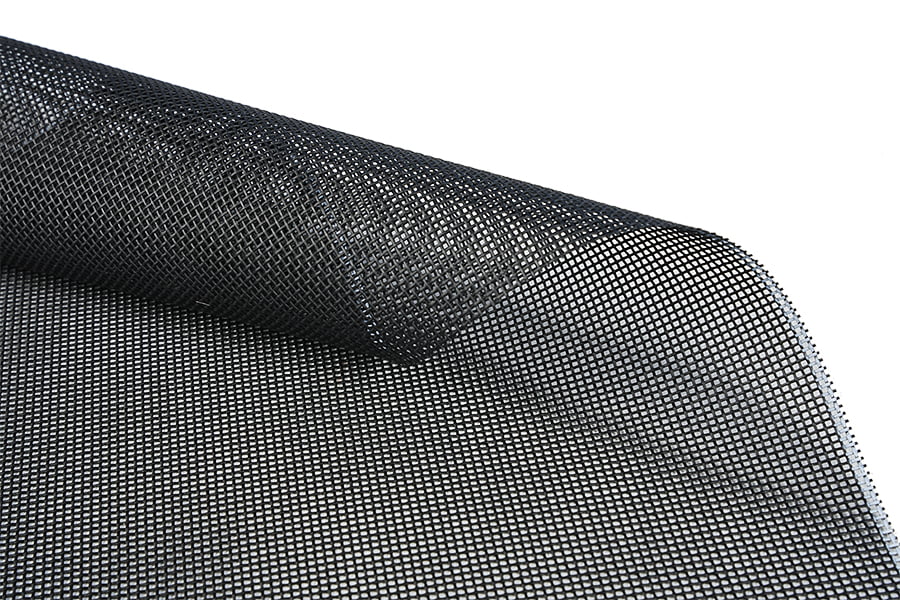
The service life of an insect-proof net is determined primarily by the core yarn material and its ability to withstand UV radiation, moisture, and temperature cycling. Glass fiber yarns, when coated properly, exhibit a tensile strength retention above 90% after 2,000 hours of accelerated QUV weathering, compared to polyester nets that often drop to 65–70% under the same exposure. At Jiaxing Jiete New Material Co., Ltd., incoming fiberglass yarns are tested for single-filament tensile strength before weaving, ensuring that the base fabric meets a minimum of 180 N/25 mm in the warp direction after PVC coating.
Beyond strength, the thermal stability of glass fiber means that an Insect-proof Net will not sag or elongate under continuous tension in hot climates. The coefficient of linear thermal expansion for E-glass is roughly 5.4 × 10⁻⁶ /°C, which is an order of magnitude lower than that of polyolefin films. This dimensional stability keeps the mesh opening consistent, preventing gaps that could compromise exclusion performance after seasonal temperature swings of 40°C or more.
Mesh geometry and its direct impact on insect exclusion and airflow
At Jiaxing Jiete New Material Co., Ltd., standard insect-proof net specifications are defined by a combination of thread diameter and aperture size, typically expressed as holes per square inch or as a direct measurement in microns. The selection of mesh count must balance physical exclusion of the target pest against the required ventilation rate. The table below correlates common mesh configurations with both the smallest insect size blocked and the resulting air permeability measured under a 100 Pa pressure drop.
Relationship between mesh count, aperture size, target pest exclusion, and air permeability
| Mesh Count (holes/inch²) |
Aperture Size (µm) |
Target Pest Blocked |
Air Permeability (m³/m²/h at 100 Pa) |
| 20 × 10 |
1400 × 900 |
Large moths, bees |
9,500 |
| 20 × 20 |
850 × 850 |
Houseflies, fruit flies |
7,800 |
| 32 × 32 |
500 × 500 |
Thrips, whiteflies |
4,200 |
| 50 × 25 |
350 × 700 |
Aphids, leafminers |
3,500 |
A common mistake in greenhouse design is to specify a mesh based only on the adult pest size, ignoring the fact that newly hatched thrips can pass through a 32 × 32 mesh. In practice, a 50 × 25 asymmetric weave provides a 350 µm barrier in the weft direction, stopping over 99% of thrips while maintaining 40% more airflow than a symmetric 50 × 50 net. This balance is critical in tropical climates where a 15% loss in ventilation can raise internal greenhouse temperature by 3°C.
Coating chemistry and its role in extending functional life
The base fabric of a woven fiberglass insect screen is inherently brittle and susceptible to abrasion. A PVC coating with integrated UV stabilizers and fungicides addresses both issues simultaneously. The coating thickness, typically between 0.15 mm and 0.35 mm per side, not only encapsulates the glass fibers but also determines the end product’s fire rating. A coating weight of 280 g/m² applied by dip-coating achieves an LOI (Limiting Oxygen Index) above 30%, meeting the requirements of B1 fire classification per DIN 4102.
Beyond standard PVC, newer acrylate-based coatings can improve visible light transmission by 6–8 percentage points while offering better resistance to acid rain. The selection of an Insect-proof Net with the correct coating for a specific environment directly impacts cleaning cycle intervals: a smooth, non-porous surface reduces dust and pollen adhesion, cutting the required cleaning frequency in half compared to uncoated or rough-textured nets. These coating formulations are routinely validated through immersion tests in pH 4 and pH 10 solutions at Jiaxing Jiete New Material Co., Ltd.
Installation practices that maximize exclusion efficiency
Even the highest-specification net will fail if the perimeter is not sealed correctly. Field studies in Mediterranean greenhouses show that over 70% of whitefly intrusion occurs through gaps at the edges of screens, not through the mesh itself. At Jiaxing Jiete New Material Co., Ltd., installation guidelines recommend a 50 mm minimum overlap at all frame junctions and the use of UV-stable, self-adhesive hook-and-loop tape to create a compression seal rather than relying on staples alone.
Tension uniformity is another factor often overlooked. A glass-fiber insect net installed with less than 2% uniform strain will flap under wind loads of 30 km/h, leading to fatigue at the attachment points. A simple best practice is to pre-tension the fabric to 10–15 N/cm using a calibrated tension meter, then secure it with aluminum profiles that distribute the load across the entire edge. This method triples the service life of the net in exposed sites with regular high winds.



 English
 中文简体
中文简体