twill weave glass fiber fabric

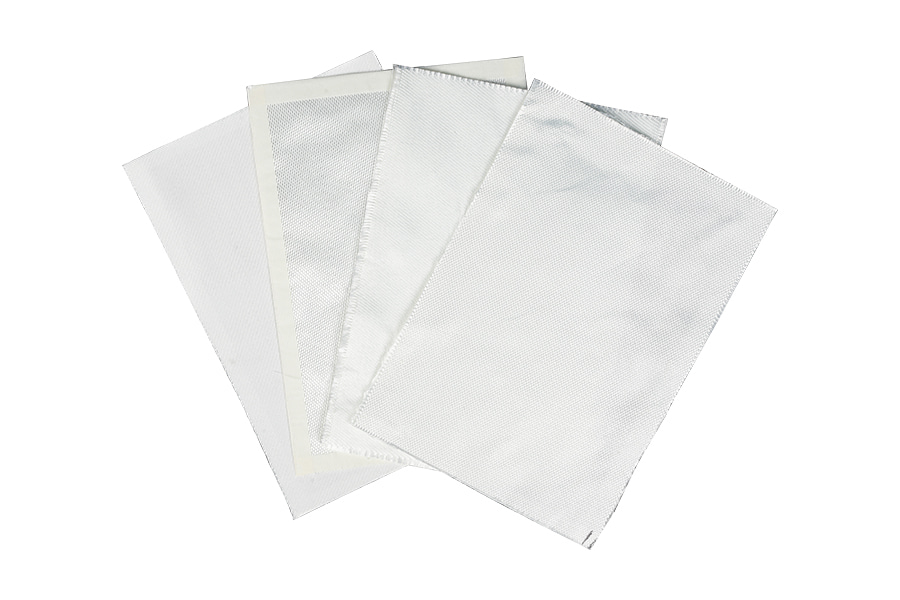
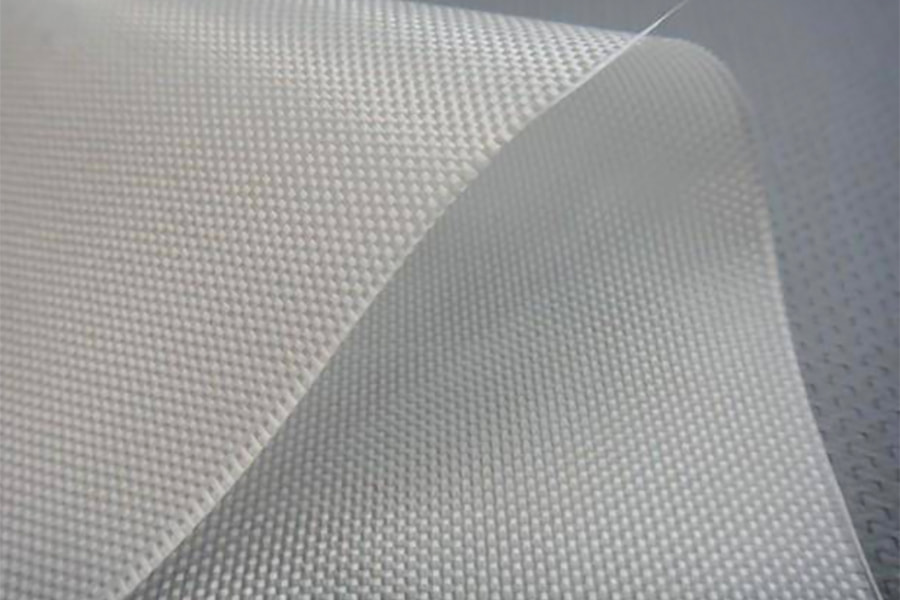
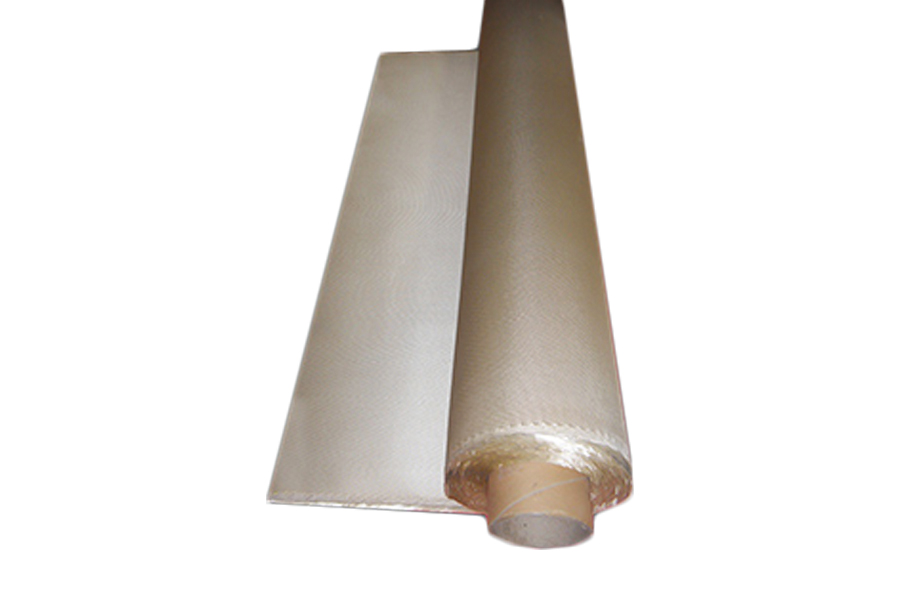
Twill weave glass fiber fabric is constructed with a diagonal interlacement pattern in which warp yarns pass over one or more filling yarns in a stepped sequence, producing a fabric with a characteristic diagonal rib. Compared with plain weave, the twill structure has fewer interlacement points per unit area, which reduces crimp and improves drapeability while retaining good dimensional stability. The fabric is woven from continuous E-glass filaments and is supplied in 2×2 and 4×4 twill configurations, with areal weights from 200 g/m² to 600 g/m² and thicknesses from 0.20 mm to 0.65 mm. Tensile strength ranges from 300 MPa to 400 MPa depending on construction and resin system. Twill weave glass fiber fabric is compatible with epoxy, polyester, vinylester, and phenolic resins and is supplied in roll widths from 1000 mm to 1500 mm and roll lengths from 30 m to 100 m.

Twill Configuration 2×2 / 4×4
Areal Weight Range 200 – 600 g/m²
Thickness Range 0.20 – 0.65 mm
Tensile Strength 300 – 400 MPa
Flexural Modulus 24 – 28 GPa
Service Temperature –60°C to +550°C

Drape Advantage

Fewer interlacement points per unit area reduce bending stiffness, allowing the fabric to conform to compound curves and tighter radii than plain weave at equivalent weight. This reduces the need for darts or relief cuts in complex mold geometries.

Crimp Reduction

Stepped interlacement lowers crimp angle relative to plain weave, improving fiber straightness and mechanical translation. Laminates achieve higher tensile and flexural values at equivalent fiber volume.

Surface Texture

The diagonal rib pattern produces a moderate surface profile. Print-through is lower than plain weave but higher than satin weave, making twill suitable for general-purpose laminates where surface finish requirements are moderate.

Handling Balance

Twill weave holds its shape better than satin during cutting and lay-up while offering more conformability than plain weave. This balance reduces handling defects and simplifies ply placement in production environments.

Supply Specification

Fiber Type Continuous E-glass
Weave Configuration 2×2 / 4×4 twill, others on request
Areal Weight 200 to 600 g/m², ±5% tolerance
Thickness 0.20 to 0.65 mm
Tensile Strength 300 to 400 MPa
Flexural Modulus 24 to 28 GPa
Sizing System Silane, epoxy / vinylester / polyester
Service Temperature –60°C to +550°C
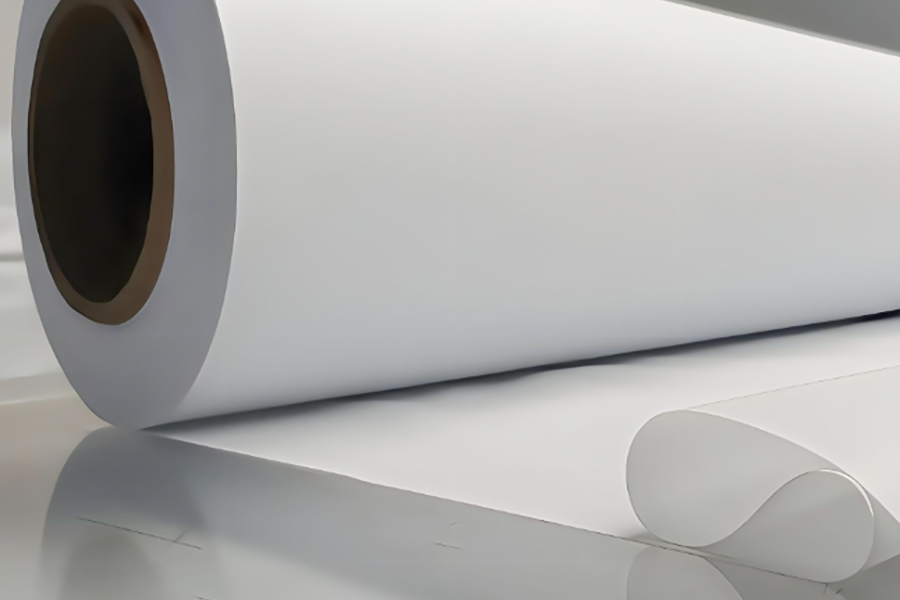
Roll Width 1000 / 1270 / 1500 mm
Roll Length 30 / 50 / 100 m

Qualified Application Segments

Marine hull and deck laminates Hull skins, deck panels, and stringer systems where drapeability and mechanical balance are required at moderate surface finish specifications.
Automotive structural panels Body panels, underbody shields, and structural inserts where conformability to complex geometries reduces lay-up labor.
Wind energy components Shear webs, root laminates, and blade shells where fatigue resistance and drapability support complex mold shapes.
Industrial piping and tanks FRP pipe wraps, tank shells, and ducting where consistent mechanical properties and chemical resistance are required.
Sports equipment Surfboards, kayaks, and bicycle components where drapeability and impact resistance drive material selection.
General composite fabrication Hand lay-up and vacuum bagging applications where twill weave provides a practical balance of cost, drape, and performance.

Production Notes

Cutting and Ply Preparation
Twill weave offers better edge stability than satin but may still exhibit some yarn pull at cut edges. Use sharp shears or rotary cutters, and apply edge tape or a light binder if plies will be handled extensively before lay-up.
Drape and Forming
The diagonal structure provides good conformity to compound curves. For tight radii, orient the fabric on the bias to increase conformability. Avoid over-stretching, which can distort the weave pattern and create resin-rich zones.
Resin Flow and Wet-out
Resin flow through twill weave is generally more uniform than satin and faster than plain weave at equivalent weight. For vacuum infusion, use resin viscosity of 150 to 300 cP at 25°C and verify fill time on trial panels.
Storage and Shelf Life
Store rolls horizontally at 15 to 30°C and 40 to 60 percent RH. Keep rolls wrapped to protect the fabric from dust and moisture. Shelf life is 36 months in original packaging. Inspect rolls before use for weave distortion or edge damage.

Procurement and Engineering FAQ

Twill weave offers lower crimp and better drapeability than plain weave, which improves mechanical translation and conformability to complex shapes. Plain weave provides higher dimensional stability and lower porosity, making it preferable for flat panels and applications where weave distortion must be minimized. Twill weave is generally selected when the part geometry requires conformability or when improved mechanical performance at equivalent weight is needed.

In 2×2 twill, each warp yarn passes over two filling yarns and under two, producing a moderate diagonal pattern. In 4×4 twill, each warp yarn passes over four filling yarns and under four, producing a longer float and a more pronounced diagonal rib. Longer floats reduce crimp further and improve drapeability, but also increase susceptibility to yarn pull and surface snagging. 2×2 twill is the more common configuration for general composite work.

Standard MOQ is 300 kg per width and weave configuration. Stock widths of 1000 mm and 1270 mm in 2×2 twill ship from inventory within 5 to 10 business days. Custom widths, 4×4 configurations, and alternate sizing systems typically require 3 to 5 weeks depending on order volume.

Yes. Twill weave provides good permeability for vacuum infusion, with resin flow characteristics between those of plain and satin weave. Use resin viscosity of 150 to 300 cP at 25°C, apply a flow medium on the top surface, and verify fill time on trial panels before production. For thick laminates, debulk every two to three plies to maintain even compaction.

Each shipment includes a certificate of analysis covering areal weight, thickness, weave configuration, sizing system, and roll length. Lot numbers are recorded for traceability. Additional test data including tensile strength, flexural modulus, and resin compatibility statements can be provided on request for qualified accounts.


Jiaxing Jiete
Est. 2010 · Haining, Zhejiang · Fiberglass Fabric
Fiberglass Fabric Manufacturer
Clarity, strength,
and coating — woven in.

Since 2010 we've woven and coated fiberglass fabric to spec for customers who need both the physics and the finish to hold up.

opaquecoatedbase weavetranslucent
Light transmittance across our fabric & membrane range
About the mill
Zhijiang Industrial Park

Jiaxing Jiete New Material Co., Ltd. is a professional manufacturer of fiberglass fabric, established in 2010 and based in Zhijiang Industrial Park, Haining City, Zhejiang Province — well connected for shipping worldwide.

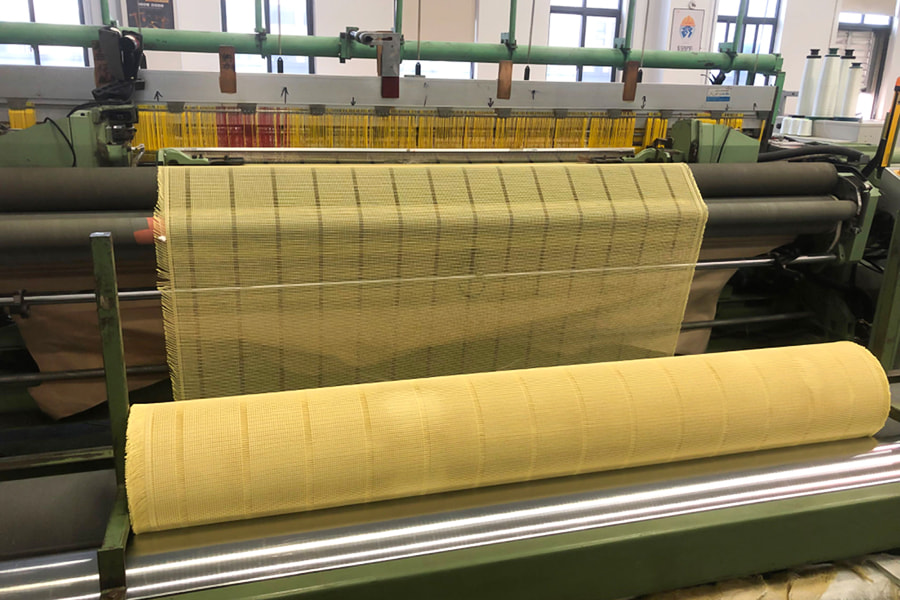
We are China Twill Weave Glass Fiber Fabric Manufacturers and Custom Twill Weave Glass Fiber Fabric Suppliers. We weave fiberglass fabric and develop custom products to specification, running Karl Mayer warping-slashing lines, air-jet looms, Dornier rapier looms, and multiple coating lines under one roof.

Jiete fiberglass weaving and coating facility
Factory floor
150,000 m²
factory floor area
200+
people on staff
200
pieces of production equipment
Product portfolio
9 material lines
Standard and high-strength weaves, heat-resistant base fabric.
Type-E · base weave
Exceptional tensile strength and impact resistance.
Aramid · high tenacity
Fine, even mesh for agricultural and architectural screening.
Mesh · screening grade
Engineered for extreme or non-standard operating conditions.
Custom · engineered
High translucency, self-cleaning surface, long-span tensile use.
PTFE · tensile grade
Non-stick, chemical resistant across a wide thermal range.
-70°C to +260°C
Flexible, waterproof, with strong high-temperature insulation.
Silicone · flexible
Durable, flame-retardant, and weatherproof for outdoor use.
PVC · flame-retardant
PU, acrylic, and other custom coatings available on request.
PU / acrylic · custom
Built to your drawing, not our catalogue

Send us a requirement outside the standard range and our R&D team will design the weave, finish, and coating around it — from first sample through to production volume.

Since 2010, on a foundation of careful management and steady reinvestment, Jiete has built a position in the global fiberglass fabric trade and long-standing partnerships across it. We'd welcome the chance to host you at the mill.

Recommended LINKS