2026-11-13
Six data fields decide whether two quotations are comparable, and a supplier that will not state all six in writing is quoting a category rather than a product.
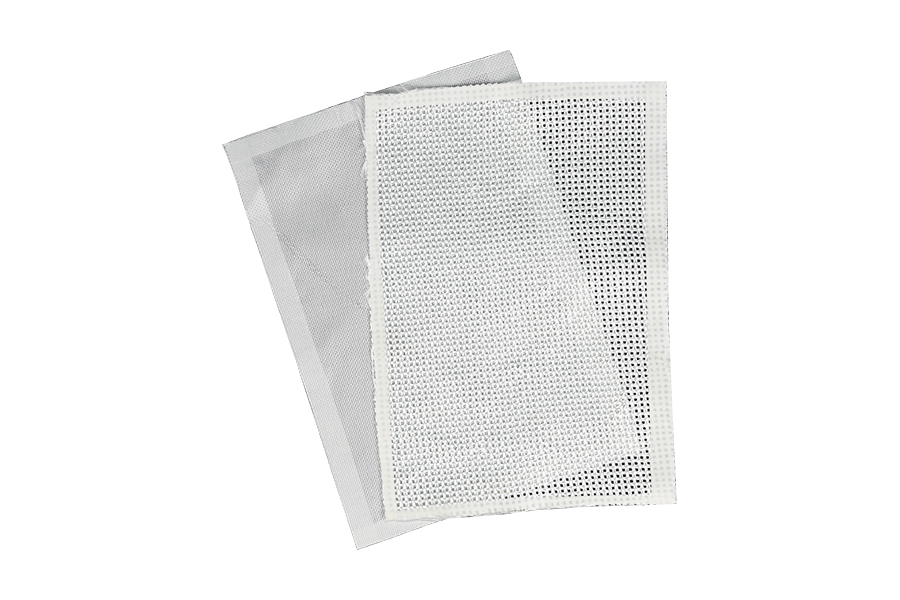
Definition: fiberglass mesh fabric is a woven textile glass fabric, normally leno-woven, produced with a controlled open aperture and supplied either uncoated for resin and plaster systems or coated with silicone, PTFE or PVC for temperature, chemical and waterproofing duty.
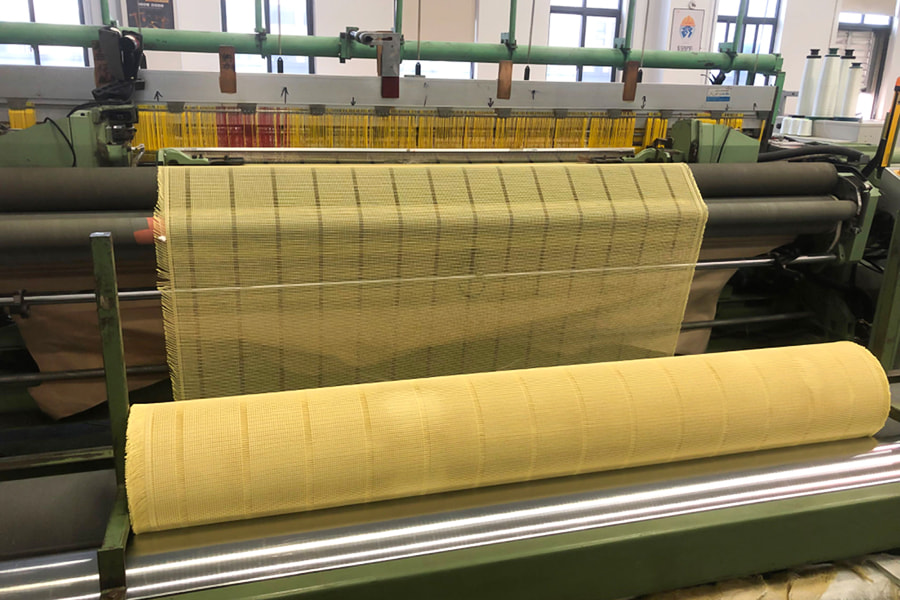
Leno weaving pairs the warp yarns and twists each pair around every weft pick. The intersections cannot slide, so the grid stays square under tension and a cut edge does not unravel into loose strands. On a sample card the two constructions look alike; on a wall they behave differently, because an unlocked grid distorts the moment it is pulled into render.
 Acrylic Coated Alkali-Proof Fiberglass Mesh ClothAcrylic-coated C- or E-glass plain-weave mesh for plaster and insulation reinforcement, with >=90% alkali strength retention and customizable openings.View Product →
Acceptance rests on four measured properties: tensile breaking force, elongation at break, mass per unit area, and residual tensile strength after alkaline ageing. Each has a defined test method, and a number quoted without its method cannot be compared with anything.
ISO 4606 specifies the strip method for woven glass fabric and reports warp and weft separately, because a loom-balanced fabric can still be asymmetric in service. EN 13496 applies the same measurement logic to finished mesh used in external thermal insulation composite systems and is the reference most European buyers cite in purchase orders. Elongation carries equal weight: a mesh that stretches beyond the strain capacity of the render it reinforces will not restrain cracking, however high its breaking force reads on a datasheet.
ISO 3374 covers mass per unit area for mats and fabrics, and ISO 4603 covers thickness. Both are quick to verify on receipt and both expose substitution early. A roll sold as 160 g/m² that measures 132 g/m² on a 100 mm x 100 mm specimen has lost about 18 percent of its glass, and tensile strength drops with the glass content.
Cement-based renders hold pore water at pH 12.5 to 13.5, and that environment attacks ordinary E-glass over months of service. AR glass carries zirconium dioxide in the batch to slow the reaction, and the property is then quantified rather than assumed by ageing specimens in alkaline solution and re-testing tensile strength. Alkali resistance is reported as the percentage of unaged strength retained, and 50 percent is a common specification floor for ETICS reinforcement, which is why alkali-resistant fiberglass cloth rolls are specified by retention figures rather than by glass type alone.
A tensile figure without a named test standard is not a specification. ISO 4606 and EN 13496 report the same physical quantity under different procedures, and mixing results from both in one comparison table invalidates the comparison.
Open area for a square mesh equals the pitch minus the strand width, divided by the pitch, then squared. A 4 x 4 mm mesh at 1.0 mm strand width delivers 56 percent open area, while a 10 x 10 mm mesh at the same strand width delivers 81 percent.
A 4 x 4 mm aperture at roughly 160 g/m² is the working standard for external wall insulation because the render has to key through the grid while the mesh stays fully embedded in the base coat. Open area below about 50 percent starves that mechanical key; open area much above 65 percent cuts the number of strands crossing a given crack and reduces crack-bridging capacity.
Coated mesh needs exposed glass for the polymer to grip, and a coating applied over 55 to 65 percent open area stays flexible without filling the apertures. Filtration media pushes the other way: the aperture is chosen from the particle size to be captured, and the weave is selected so the pore size holds under differential pressure.
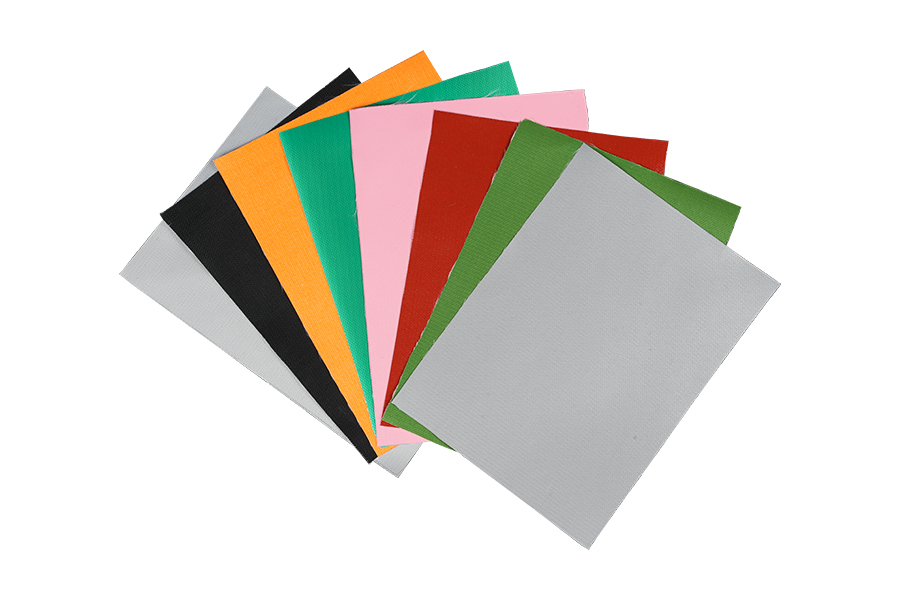
A coating changes which property governs acceptance: silicone raises service temperature and adds release, PTFE adds chemical inertness across a wider temperature window, and PVC delivers waterproofing at the lowest cost per square metre.
| Coating | Continuous service temperature | Governing property | Typical mesh use |
| Uncoated, E-glass | 500 to 550 °C | Tensile force and alkali retention | ETICS, plaster, composites |
| Silicone | 200 to 250 °C | Tear strength after flexing | Expansion joints, insulation covers, belts |
| PTFE | Minus 70 to 260 °C | Flex life and chemical resistance | Filter media, conveyor belts, tensile structures |
| PVC | Below 80 °C | Waterproofing and UV stability | Tarpaulins, blackout curtains, cable wrap |
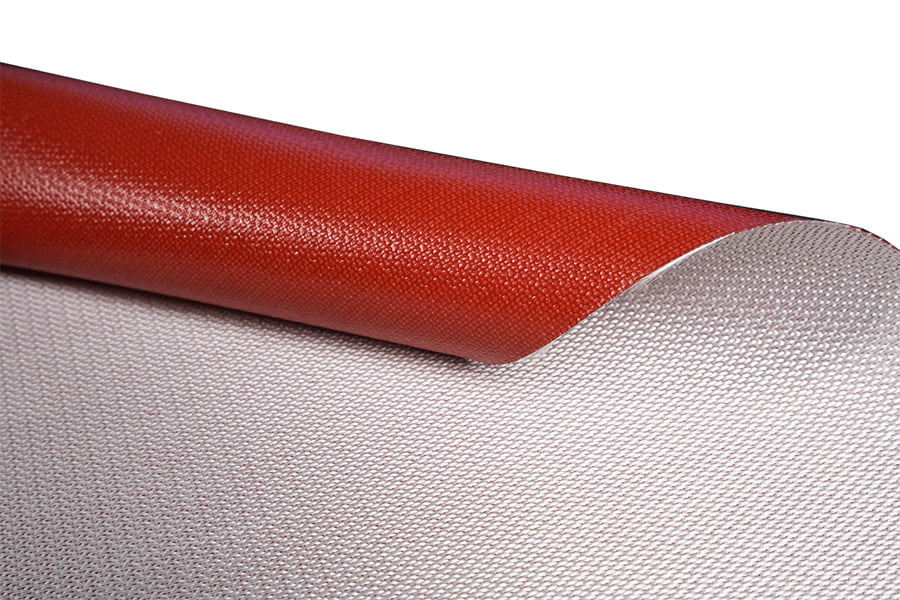 Silicone-Coated Fiberglass Fabric for Insulation and High-Temperature UseSilicone-coated fiberglass fabric offering -70°C to 260°C resistance, 15–25 kV/mm insulation, flame retardancy, and corrosion resistance for electrical and high-temperature equipment.View Product →
Each application tests a different property first, and a mesh that wins on tensile force can lose on aperture, coating adhesion or dielectric strength.
| Application | Property tested first | Typical mesh form | Reference |
| External wall insulation | Residual strength after alkaline ageing | 160 g/m² AR leno mesh, 4 x 4 mm | EN 13496 |
| Composite reinforcement | Tensile force and resin wet-out | Uncoated plain or twill, sized for the resin | ISO 4606 |
| Filtration and separation | Pore size and chemical resistance | Uncoated or PTFE-coated mesh | Supplier pore rating |
| Electrical insulation | Dielectric strength and tear resistance | PVC-coated mesh, 0.3 to 0.5 mm | IEC 60243 |
| Fire protection | Flame behaviour and temperature limit | Silicone or vermiculite coated fabric | EN 13501-1 |
 PTFE-Coated Fiberglass Mesh Membrane for Architectural and Industrial ApplicationsPTFE-impregnated fiberglass mesh with 20–70% porosity, high light transmittance, and flexible forms for chemical-resistant, breathable industrial and architectural membrane structures.View Product →
Eight parameters in the RFQ remove most of the ambiguity that later becomes a specification dispute after the rolls have shipped.
The full parameter list for a woven glass RFQ is set out in this ten-parameter specification checklist.
Three checks catch most non-conformities before a roll reaches the production line: mass per unit area on specimens cut one metre apart, aperture and strand count across a 100 mm span, and tensile breaking force on a conditioned sample.
No. Mesh count describes geometry, not strength. Strength comes from yarn linear density, strand count per centimetre and glass composition, which is why a 5 x 5 mm mesh built on heavier yarn can outperform a 10 x 10 mm mesh on the same tensile test to ISO 4606.
A 160 g/m² plaster grade measured to ISO 4603 typically falls between 0.3 mm and 0.5 mm at the strand crossover. Coated meshes run 0.5 mm to 0.9 mm depending on the polymer add-on weight.
Only where alkali resistance is not specified. Cement pore water at pH 12.5 to 13.5 degrades untreated E-glass, so ETICS work uses zirconia-bearing AR glass and quantifies the outcome as retained tensile strength after ageing, with 50 percent a common floor.
EN 13496 governs finished glass fibre mesh for thermal insulation systems, while ISO 4606 governs the underlying woven fabric. Both report breaking force and elongation, but results produced under the two procedures are not directly interchangeable.
Specify the yarn, the weave, the mass, the aperture, the tensile value with its standard and the coating add-on. Anything less and the roll you receive meets a description, not a requirement.
Recommended Products
Copyright © 2025 Jiaxing Jiete New Material Co., Ltd. All Rights Reserved.
Wholesale Wide Width Fiberglass Cloth Roll Suppliers



 English
 中文简体