2026-10-28
A tensile roof has to carry biaxial tension, shed rain, resist wind uplift, and keep its appearance for decades without maintenance. PTFE architectural membrane does that for thirty years or more, not because it is one remarkable polymer, but because it is a precision composite of woven fiberglass and a polytetrafluoroethylene coating. The glass fabric carries load, and the PTFE protects the glass from moisture, UV and abrasion; each layer has a defined job, and the quality of each layer sets the service life of the roof.
Specifying PTFE membrane therefore involves more than choosing a product name. Fire safety, light transmission, prestress, seam welding and coating weight must all be confirmed against the actual production batch. This article explains how PTFE architectural membrane works, how it compares with alternative membrane materials, and what to verify when you buy it from a manufacturer.
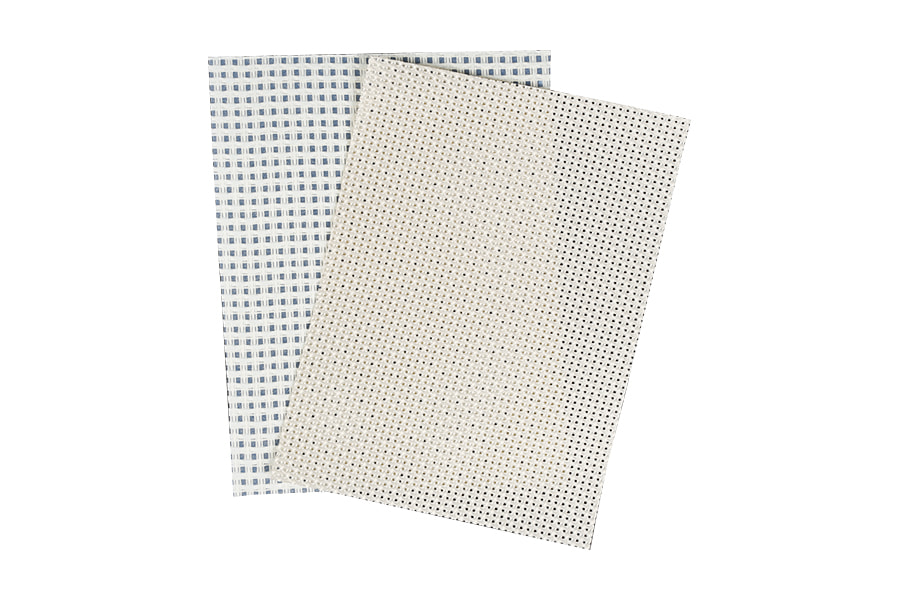
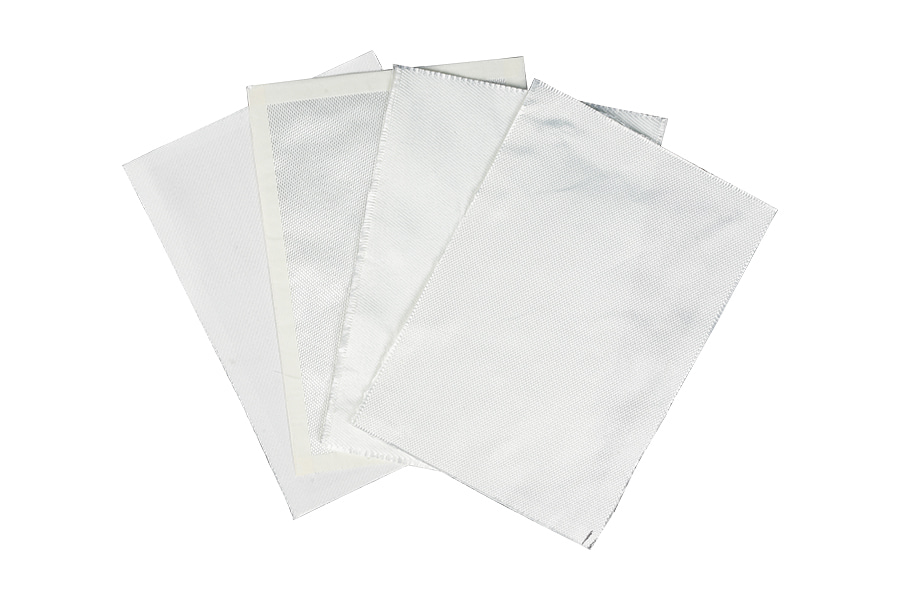
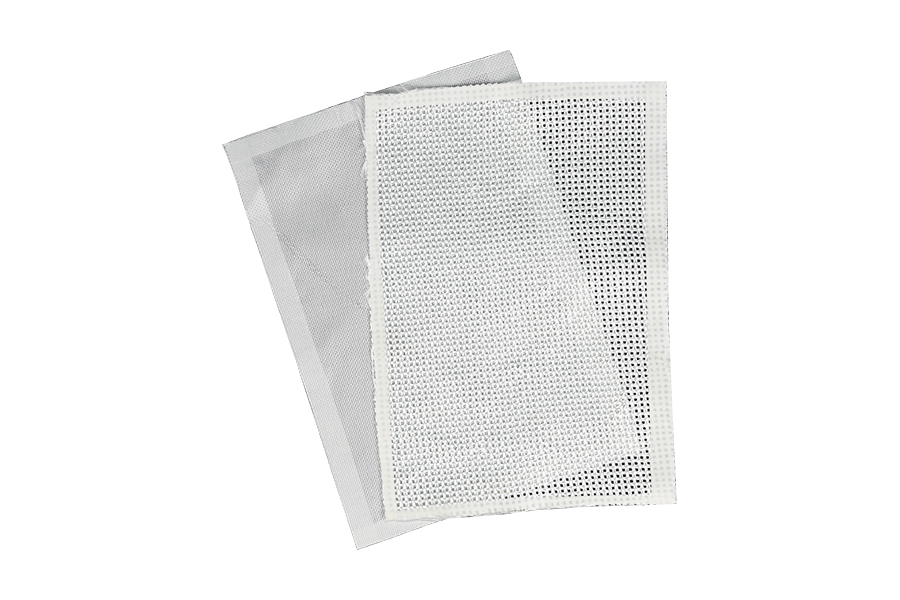
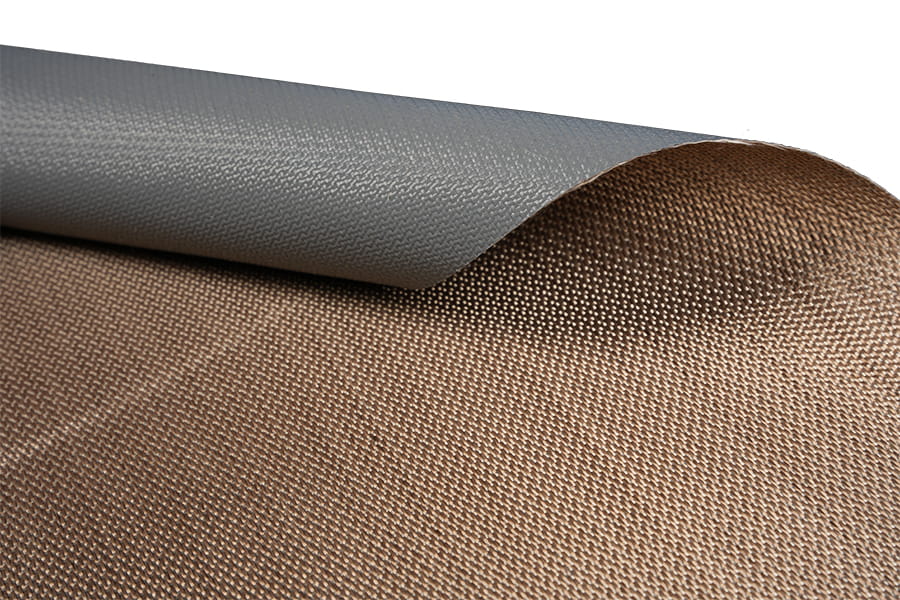
PTFE architectural membrane starts as a woven fiberglass fabric. Continuous multi-filament glass yarn, normally E-glass or, for higher flex-fatigue resistance, fine Beta-type yarn, is woven with controlled yarn spacing and crimp so the fabric carries load in both warp and weft directions. The woven cloth then passes through a coating line where PTFE resin is applied in several passes. Heat fusion bonds the PTFE to the glass surface and closes the weave into a continuous film.
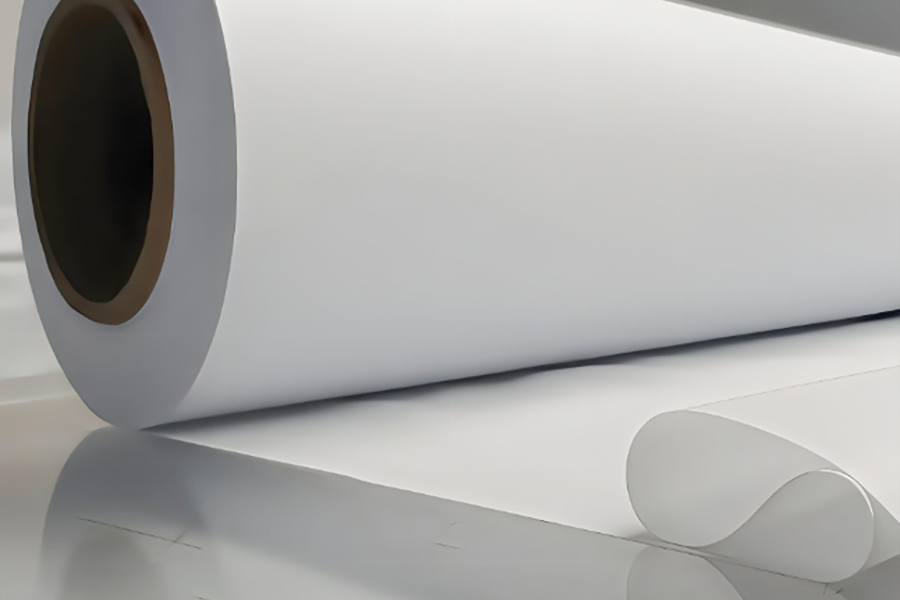
The finished membrane is flexible but structurally demanding: typical architectural grades are 0.4 to 1.5 mm thick and weigh between 800 and 1,500 g/m². Panel-to-panel variations in coating thickness, coating adhesion and pinhole count directly affect weld quality and long-term airtightness. For this reason, the production discipline on the coating line is as important as the nominal grade.
In a tensile structure the membrane is a structural member. Its working strength comes from glass filaments, which offer tensile strength comparable to structural steel on a weight basis. More important for a roof is dimensional stability: woven fiberglass has very low elongation and nearly no creep, so a membrane tensioned during installation remains at that stress level years later. Polyester-based membranes relax under sustained load and need periodic re-tensioning, which is a practical maintenance cost that PTFE avoids.
The weakness of glass is flexing and moisture. Bare glass filaments break after repeated bending, and moisture slowly attacks the filament surface and lowers strength. The weave architecture and yarn fineness are therefore chosen to maximize flex fatigue resistance, which is why high-end architectural grades use fine yarns rather than coarse industrial rovings.
PTFE contributes little to tensile strength, but it makes the composite durable. It is chemically inert, does not absorb water, and does not degrade under UV radiation. Its low surface energy creates the self-cleaning effect that keeps roofs bright. The coating also bridges the weave surface, prevents glass filaments from rubbing against each other during flexing, and distributes load across adjacent yarns.
The balance between the two layers is a manufacturing decision. If coating weight is too low, the glass is exposed and pinholes appear early; if it is too high, strength per square meter drops and cost rises without benefit. Reliable suppliers define both the glass fabric construction and the coating weight per side, and they verify both during production.
PTFE architectural membrane does not sustain combustion. The glass substrate neither burns nor melts, and PTFE has a high limiting oxygen index. Typical architectural grades achieve Class A ratings in North American tests and B-s1,d0 in European classifications, which is why the material is accepted in stadiums, terminals and other large public buildings. In a severe sustained fire, PTFE will eventually decompose and release products, but the membrane does not spread flame or produce burning drips that could ignite materials below.
Rain performance is a design feature. PTFE has one of the lowest surface energies of any engineering polymer, so water beads and runs off readily, carrying dust with it. A white PTFE roof in a region with regular rainfall stays bright without washing, while many coated alternatives gradually discolor.
UV resistance is similarly inherent. PTFE does not absorb solar UV energy in a way that breaks the polymer chain, so the membrane does not embrittle or lose strength from sun exposure. In practice, buildings designed with PTFE membrane assume a service life of 30 years or more, and several generations of projects have exceeded that.
PTFE membranes typically transmit 12 to 25 percent of visible light, which reduces daytime lighting loads in atriums, train stations and sports buildings. Because the coating scatters light, the transmitted daylight is diffuse rather than glaring.
The same membrane reflects a large share of solar heat, lowering cooling loads. The combination of useful daylight and solar control is unusual among structural roofing materials and is one of the main reasons architects choose PTFE for climate-responsive design.
Three material families dominate long-span tensile roofing: PTFE-coated fiberglass, PVC-coated polyester, and ETFE foil cushions. They differ in lifespan, fire behavior, load capacity and transparency.
| Property | PTFE-Coated Fiberglass | PVC-Coated Polyester | ETFE Foil Cushions |
|---|---|---|---|
| Typical service life | 30+ years | 15-20 years | 30+ years for the foil; system depends on air supply |
| Fire behavior | Non-combustible glass substrate; B-s1,d0 or Class A typical | Combustible; flame-retardant grades available; may drip | Fluoropolymer foil; melts under sustained heat; system testing required |
| Load capacity | High biaxial strength; very low creep | Moderate strength; creeps under sustained load | Low; relies on internal air pressure |
| Light transmission | 12-25 percent, diffused | 10-30 percent depending on coating | Up to 95 percent, transparent |
| Self-cleaning | Excellent | Moderate, depends on top coat | Good, but low slopes must drain |
| Typical installed cost | Higher | Lower | High, plus mechanical air systems |
These comparisons are typical rather than absolute; each family has grades with different fire treatment, strength and lifespan. Across projects, the pattern is consistent: PTFE-coated fiberglass is the choice when fire safety, low maintenance and stable prestress over decades are priorities. PVC-coated polyester wins on first cost. ETFE cushions win where transparency is the primary architectural goal.
PTFE membrane has no bending stiffness and works only in biaxial tension. Every roof must be doubly curved, typically anticlastic (saddle-shaped), so that prestress can be applied in both yarn directions. Because glass fabric elongates very little, errors in geometry produce large stress changes. Engineers must define the surface and the target prestress together, and the cutting pattern must translate that double curvature into flat panels with acceptable accuracy.
Coated fiberglass is comparatively stiff, so panel cutting tolerances are tighter than for coated polyester. Seams are closed by heat welding, and the weld window is narrow: too low a temperature gives weak seams, and too high a temperature damages the coating. Seam strength should therefore be verified by trial welds on the exact production batch that will be delivered. A material certificate from a different lot is not reliable evidence.
Edge clamps, cable terminations and roof penetrations concentrate stress. Connections should spread the load across several weave repeats rather than create point loads. Drainage must prevent ponding, because standing water adds sustained local load and accelerates dirt accumulation. The membrane itself is dimensionally stable, so the steel structure must accommodate thermal movement; the fabric cannot absorb the movement of the frame through elongation.
A product name is not a specification. When buying PTFE architectural membrane, define the glass yarn type (for example, E-glass or fine Beta-type yarn), fabric construction and areal weight, coating weight per side, total membrane thickness and weight, tensile and tear strength in both warp and weft directions, the fire classification and the exact test standard, light transmission, surface defect acceptance, roll width and batch continuity.
Tolerances belong in the specification as well. A total weight of 1,150 g/m² with a ±5 percent tolerance is a different product from the same nominal weight with a ±10 percent tolerance. The lower bound must still meet strength, coating and pinhole requirements, so the tolerance is a design decision, not a paperwork detail.
Ask for recent production test reports, not sales literature. Buyers who source directly from a fiberglass fabric manufacturer that also does coating in-house gain an advantage: the coating line can be adjusted to the actual fabric surface, and quality is controlled from yarn preparation to the finished roll.
On inspection, the main defects to look for are pinholes, thin coating near the selvedge, contamination before sintering, and thickness variation along the roll. Light-table inspection and regular thickness checks are basic evidence of quality. If a supplier cannot explain how coating weight is measured, how batches are traced, or what the acceptance criteria are, the risk transfers to the building.
PTFE architectural membrane remains the most durable option among coated architectural fabrics. It is non-combustible, self-cleaning, dimensionally stable and proven in structures that have now passed several decades of service. Its long-term performance is decided in the factory: by yarn quality, weave construction, coating discipline and inspection. For engineers, contractors and building owners, the practical task is not limited to choosing the material; it is specifying the substrate, verifying the coating, and holding the manufacturer to a documented production standard.
Recommended Products
Copyright © 2025 Jiaxing Jiete New Material Co., Ltd. All Rights Reserved.
Wholesale Wide Width Fiberglass Cloth Roll Suppliers



 English
 中文简体