2026-10-23
Two coated fiberglass rolls can look identical on a warehouse table and behave completely differently after one winter outdoors. The weave is the same E-glass and the color is the same grey, yet one surface chalks, fades and lets water wick through the seams, while the other shrugs off sun and rain for years. The difference usually sits in a single line of the specification: the coating system and the weather-resistance data behind it.
This guide explains the coating and weathering requirements that decide whether acrylic coated fiberglass fabric lasts three seasons or ten years, and how to write them into a purchase order a coating plant can actually follow.
Acrylic coated fiberglass fabric is a woven glass-fiber textile finished with a pigmented acrylic polymer layer that adds waterproofing, UV resistance and color, while the glass substrate carries the entire mechanical load.
The division of labor between the two materials drives most specification decisions. Glass fiber contributes non-combustibility, dimensional stability and high tensile strength; it will not burn or stretch under load. The acrylic layer contributes what glass cannot: flexibility, water shedding, UV endurance and printable color. Coating add-on usually runs between 15% and 40% of total fabric weight, and the substrate itself matters as much as the coating, since plain weave gives stability while twill gives drape. Buyers who want to go deeper on the base textile can start with a standard heat-resistant fiberglass cloth.
Three coating parameters decide how the fabric performs in service: add-on weight, binder formulation and coverage control.
Miss any one of them and the fabric can pass a factory inspection yet fail in its first season outside. Fix the following points in writing before production starts:
 Acrylic Coated Fiberglass Fabric for Construction and Industrial UseA fiberglass base fabric with an acrylic resin coating offering weather resistance, chemical resistance, and flexibility. A relevant reference point when specifying weather-resistance test criteria before production begins.View Product →
Weather resistance is not one property but a bundle of test methods and pass criteria, and each one should appear in the purchase order.
Acrylic sits in the middle of that thermal map. When an application needs sustained heat above roughly 130 °C, or broad chemical resistance, silicone and PTFE systems take over; a UV-resistant silicone tarpaulin is the usual next step for outdoor covers that also face heat.
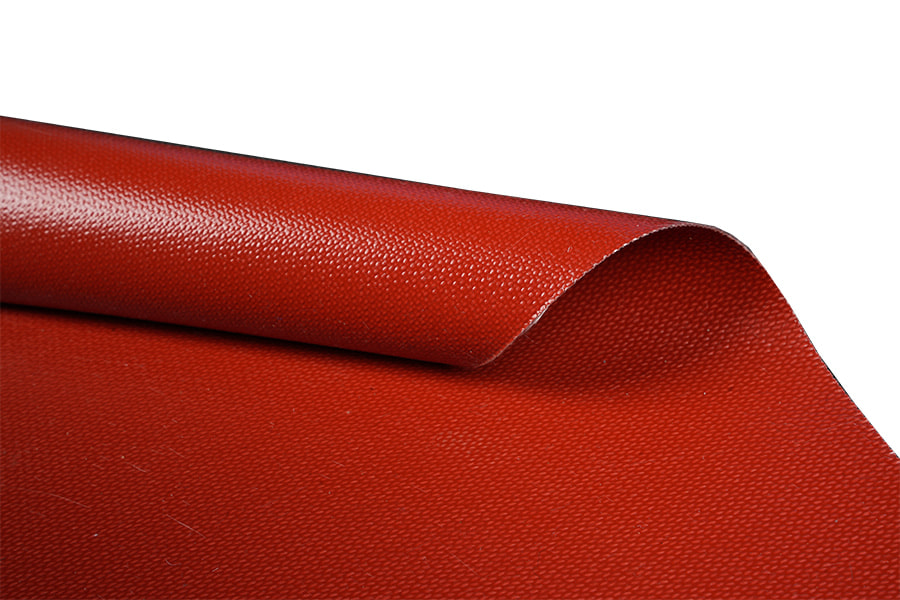 UV-Resistant Waterproof Silicone Tarpaulin for Outdoor CoversSilicone-coated fiberglass tarpaulin withstands -70°C to 260°C, resists tearing, water, flame, and UV. The usual next step for outdoor covers facing heat beyond what acrylic handles.View Product →
Acrylic wins on UV stability per unit of cost; PVC wins on price and weldability, silicone on heat resistance, and polyurethane (PU) on abrasion.
| Property | Acrylic | PVC | Silicone | PU |
| UV and weathering | Excellent color and gloss retention | Good, but plasticizer loss over time | Excellent | Fair to good |
| Continuous service temperature | About 120 °C | About 65 °C | About 200 °C | About 90 °C |
| Low-temperature flexibility | Down to about -40 °C | Stiffens below about -10 °C | Down to about -60 °C | Down to about -30 °C |
| Heat-sealed seams | No, sewn seams | Yes, standard practice | No | Partial |
| Relative cost | Medium | Low | High | Medium |
| Typical uses | Outdoor covers, wallcovering, insulation jackets | Tarpaulins, ducts, curtains | Fire blankets, conveyor belts | Protective covers, industrial liners |
PVC remains the default wherever heat-sealed seams and the lowest possible price dominate, and the trade-offs between the two chemistries are examined in more depth in our guide to PVC coated fiberglass fabric.
 Tear-Resistant Waterproof PU Coated Fiberglass FabricPolyurethane-coated fiberglass fabric combines waterproofing, abrasion and tear resistance, and flexibility for industry, construction, and environmental applications, balancing cost against silicone and acrylic alternatives.View Product →
Four verification steps will filter out unstable coating lines before the first container is packed.
Supplier capability matters as much as the specification sheet. A manufacturer that controls warping, weaving and coating on one site can correct add-on and coverage between batches without a subcontractor round-trip; Jiaxing Jiete New Material Co., Ltd., a fiberglass fabric manufacturer in Haining, Zhejiang, runs roughly 150,000 square meters of plant with in-house coating lines built for exactly that kind of batch-to-batch control.
The glass substrate is inherently non-combustible, so the fabric itself will not sustain burning. The acrylic layer can be formulated with flame-retardant additives to meet standards such as NFPA 701 or BS 5852, but a flame-retardant grade and a decorative grade are different products, so request the certificate for the exact recipe being quoted.
With a 25-35% double-side add-on and a proper UV package, suppliers commonly project 5 to 10 years of outdoor service in temperate climates, and less in high-UV regions. The 1,000 to 2,000 hour accelerated weathering test written into the specification is the best early predictor of that figure.
No. Acrylic films do not melt cleanly enough for welding, so seams are sewn with UV-stable polyester or PTFE thread and then sealed with tape or liquid seam sealer. If welded seams are a hard requirement, PVC coating is the more practical chemistry.
Start from 25-35% add-on applied to both sides for permanent outdoor exposure, and from 15-20% for indoor wallcovering. Put the percentage and its tolerance into the purchase order, not just the total weight, so the coating line cannot drift between batches.
Recommended Products
Copyright © 2025 Jiaxing Jiete New Material Co., Ltd. All Rights Reserved.
Wholesale Wide Width Fiberglass Cloth Roll Suppliers



 English
 中文简体