2026-10-09
A maintenance engineer is wrapping a 210°C exhaust duct, a fabricator is quoting a welding curtain, and a plant manager is replacing a conveyor surface that keeps scorching. They are buying different products, but they are all trying to answer the same question: what is the real temperature limit of silicone coated fiberglass fabric?
The short answer is that a typical grade is rated for continuous service from about -70°C to 260°C, with short peaks near 300°C possible. The more useful answer is which component sets that limit. The woven glass base can withstand far more heat on its own; it is the silicone coating, the weave density, and the coating weight that decide when the material starts losing strength or flexibility.
Because the glass cloth carries the load while the silicone provides long-term protection, this material sits in the middle of the coated-fabric temperature range: well beyond PVC- or PU-coated cloths, but below vermiculite or high-silica constructions. The base cloth belongs to the same family as industrial fireproof fiberglass fabric, which in uncoated form is often specified where the only job is to block heat rather than seal a surface.
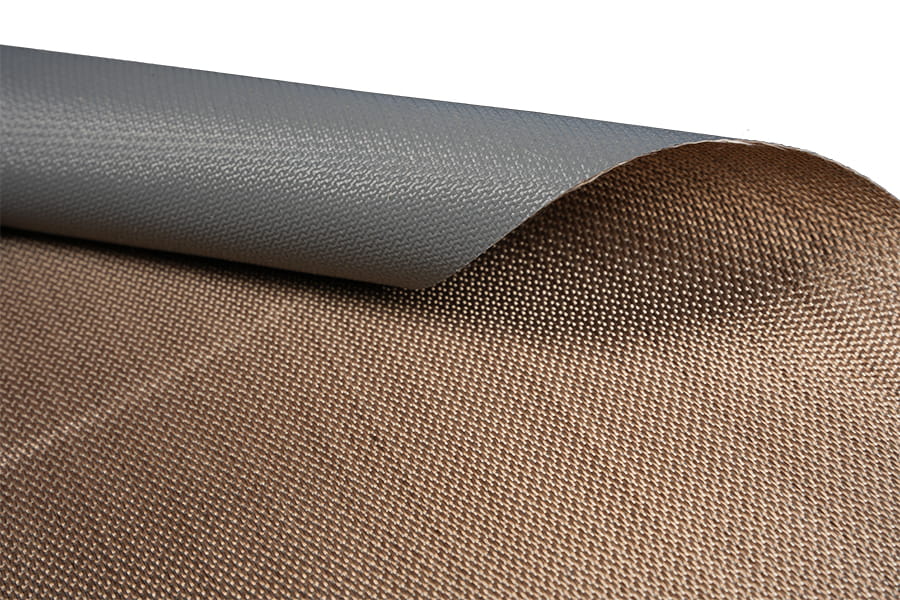
Silicone coated fiberglass fabric is exactly what the name says: a woven fiberglass cloth, usually E-glass, coated on one or both sides with silicone rubber. Each layer does a different job. The glass supplies dimensional stability, tensile strength, and resistance to combustion. The silicone contributes low-temperature flexibility, water repellency, release (non-stick) behavior, and protection of the glass filaments from abrasion and moisture.
For temperature performance, the practical rule is simple: the glass is not the constraint under normal operating conditions; the coating is. E-glass softens well above 800°C, so in the range where these fabrics are normally used, up to about 300°C, the failure mode you are managing is the silicone.
Two-side coating seals the cloth completely, improves dielectric strength, and is the standard choice for insulation wraps, fire blankets, and conveyor belts. One-side coating leaves a glass surface exposed on the reverse, which can be useful for weld splatter protection or where one face must breathe. The choice also affects long-term heat behavior: a sealed two-side coating slows air movement inside the weave and protects the fibers from oxidation over years of service.
Coating weight typically ranges from roughly 150 g/m² up to 600 g/m² or more. Heavier coatings produce a stiffer, more abrasion-resistant sheet; lighter coatings keep the fabric soft and easy to drape. Cure quality matters just as much. A properly cured silicone layer does not blister or smoke at its rated temperature, while an under-cured coating releases volatiles and hardens earlier.
Manufacturers usually describe the envelope with two figures: a continuous operating range and an intermittent peak. The table below summarizes typical values for a standard two-side coated grade.
| Condition | Temperature | What It Means in Practice |
|---|---|---|
| Continuous service | -70°C to 260°C | The fabric retains flexibility, sealing, and mechanical strength over long installations. |
| Intermittent peaks | Up to 300°C–320°C | Acceptable for short cycles; repeated peaks progressively reduce coating life. |
| Uncoated glass base (reference) | Above 500°C for E-glass | Explains why glass is rarely the weak link in a coated construction. |
| Brief flame contact (fire blanket duty) | Localized flame | Surface silicone may degrade in contact zones; the glass layer still acts as a barrier. |
The long-term ceiling sits where the silicone begins to oxidize. Above roughly 250–280°C for sustained periods, silicone rubber slowly hardens, turns brittle, and can eventually lose adhesion to the glass. That is why the 260°C figure appears on most data sheets: it is the point where the coating still performs predictably for years rather than months.
Grades built for the upper end of that envelope take this into account. A high-temperature silicone insulation fabric, for example, combines a dense glass weave with a flame-retardant, corrosion-resistant coating so the material can hold up near 260°C without premature stiffening.
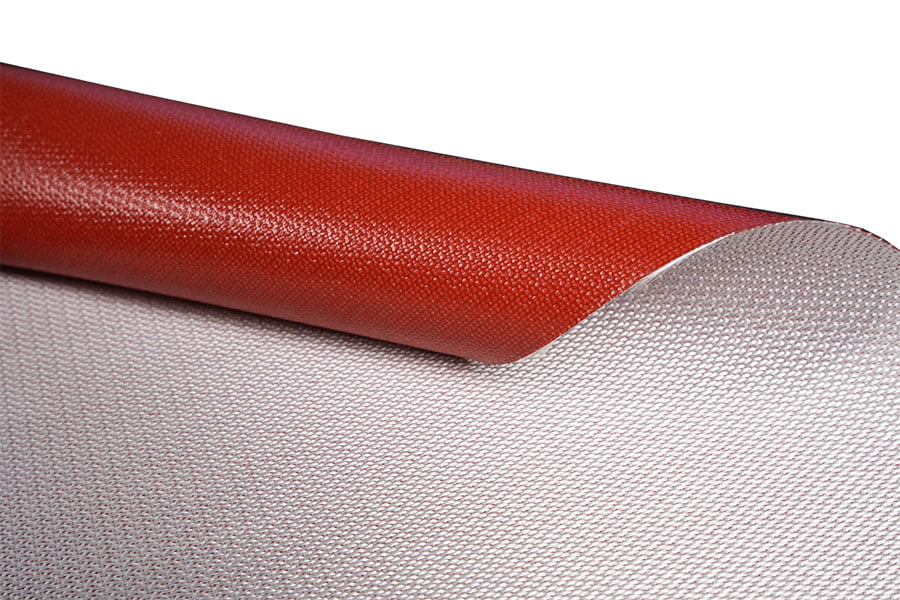 Wholesale High temperature resistant, flame retardant, corrosion resistant silicJiaxing Jiete New Material Co., Ltd China Wholesale High temperature resistant, flame retardant, corrosion resistant silicone insulation ...View Product →
The data sheet number is a starting point. In service, three factors shift the limit: the silicone formulation, the fabric construction, and how heat and load are combined.
Standard methyl silicone rubber covers the typical -70°C to 260°C range. Formulations modified with phenyl groups improve short-term heat stability, and the catalyst system matters as well: platinum-cured coatings generally retain flexibility longer at high temperature than peroxide-cured equivalents. Because these differences are invisible to the eye, the data sheet and test reports are the only reliable way to compare grades.
Plain weaves are the default for coated fabrics because they give a stable, dimensionally consistent surface. Expanded or needle-punched constructions are used for gaskets and insulation wraps and have different thermal behavior. Yarn type matters at the extremes: standard E-glass covers the coating range comfortably, while high-silica yarn pushes the base fabric further when the coating acts as a secondary layer. Manufacturers usually summarize these construction choices in resources such as special functional fiberglass fabric specifications and uses, where weave, coating, and intended application are linked.
A blanket hanging without tension can tolerate temperatures at the top of the envelope. The same fabric under constant tension, such as a conveyor belt carrying hot molded parts, reaches its safe limit earlier because the coating softens slightly and the glass weave must carry the full load. Thermal cycling is another accelerator: every excursion from ambient to 250°C and back creates micro-stresses at the coating-fiber interface. For cyclic service, engineers often choose a grade rated 20–30°C above the maximum process temperature to buy back service life.
Silicone is rarely chosen because it is the highest-temperature coating available; it is chosen because it offers the best combination of temperature range, flexibility, sealing, and price in the mid-to-high band. The table below shows where it sits.
| Coating | Typical Continuous Range | Key Strengths | Common Applications |
|---|---|---|---|
| Silicone | -70°C to 260°C | Flexible, waterproof, non-stick, dielectric | Fire blankets, insulation wraps, conveyor belts |
| PTFE | -70°C to 260°C (some grades to 300°C) | Chemical and release performance, low friction | Conveyor and mesh belts, heat sealing, welding curtains |
| Vermiculite | Short-term exposure up to ~1000°C | Extreme heat tolerance, rigid barrier behavior | Casting protection, high-temperature barriers |
| PVC | Roughly -30°C to 70°C | Low cost, UV and weather resistance | Tarpaulins, air ducts, protective curtains |
If the process stays cool, PVC coated fiberglass fabric is a far cheaper option, but it cannot approach the continuous heat ceiling of silicone; it softens and stiffens well below 100°C. At the other end, vermiculite-coated fabric handles temperatures that would destroy silicone within minutes, but it is stiffer and more specialized. The practical choice therefore depends on the actual maximum temperature, the duration of exposure, and whether the material must remain flexible.
The -70°C to 260°C envelope is not abstract; it maps to specific industrial jobs.
For direct flame protection, the standard product is a nontoxic silicone fire blanket, because the coating delays heat while the fabric stays compliant enough to drape over uneven surfaces.
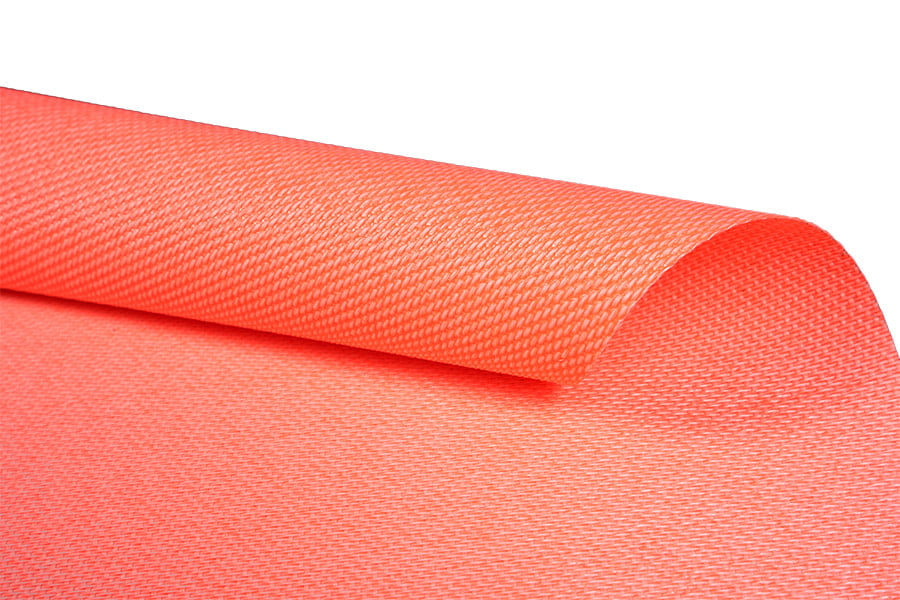 Wholesale Non-toxic silicone fire blanket - High temperature resistant fire suppJiaxing Jiete New Material Co., Ltd China Wholesale Non-toxic silicone fire blanket - High temperature resistant fire suppression mat Sup...View Product →
Process lines that carry freshly molded or hot goods typically use a heat-resistant non-stick silicone conveyor belt, which borrows its thermal rating from the same coating system while adding the release surface the process needs.
Wholesale Heat-resistant and high-temperature non-stick silicone conveyor belt SJiaxing Jiete New Material Co., Ltd China Wholesale Heat-resistant and high-temperature non-stick silicone conveyor belt Suppliers and Ex...View Product →The difference between a fabric that lasts five years and one that fails in five months is usually in the specification details. Check these points before committing to a supplier.
Silicone coated fiberglass fabric is a dependable mid-high temperature material when the coating, weave, and specification match the process. Confirm the numbers with your supplier, test a sample at your actual temperature profile, and the 260°C envelope will work exactly as it is designed to.
Recommended Products
Copyright © 2025 Jiaxing Jiete New Material Co., Ltd. All Rights Reserved.
Wholesale Wide Width Fiberglass Cloth Roll Suppliers



 English
 中文简体
中文简体