

 English
 中文简体
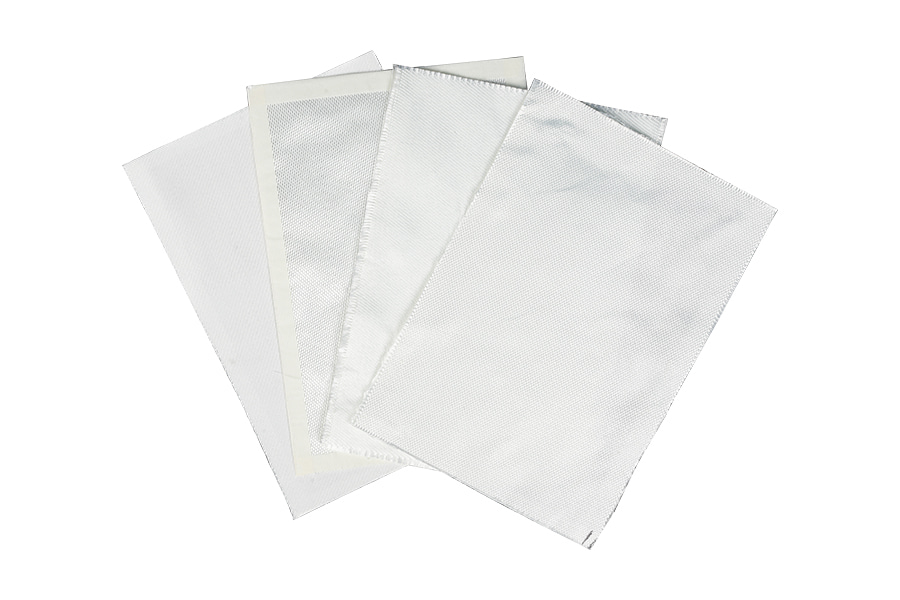
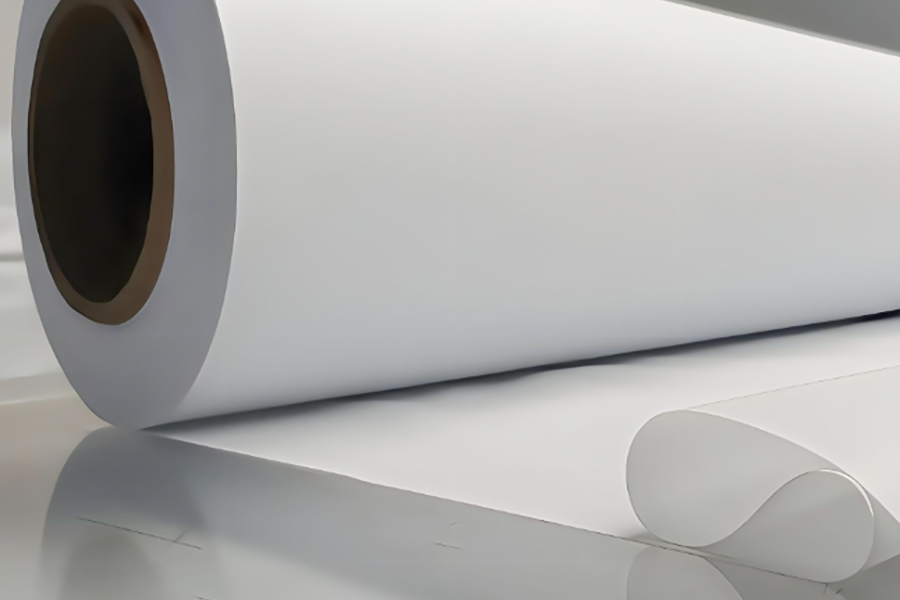
中文简体Direct answer: Special Functional Fiberglass Fabric is available in weights from 60 g/m² to 900 g/m², thicknesses from 0.08 mm to 3.0 mm, and three primary weaves—plain, twill, and satin. Plain weave (0.08-0.5 mm) excels in dimensional stability for electrical insulation; twill weave (0.3-1.2 mm) offers drapeability for protective curtains; satin weave (0.8-3.0 mm) provides maximum coating adhesion for high-temperature ducting. Key industrial applications include aerospace fire barriers (up to 550°C continuous), automotive heat shields, welding blankets, and pipeline insulation.
When selecting Special Functional Fiberglass Fabric, engineers face three interdependent parameters: weight (mass per unit area), thickness (caliper), and weave architecture. These variables directly determine mechanical strength, thermal resistance, and handling characteristics. Below we break down each parameter with measurable data and match them to specific performance tiers.
Weight, Thickness, and Weave Options by Performance Level
The table below presents standard offerings from leading manufacturers (e.g., Saint-Gobain, 3M, Unifrax). Values represent typical tolerances: weight +/-5%, thickness +/-0.02mm for products under 1.0mm.
| Performance Tier | Weight (g/m²) | Thickness (mm) | Weave Type | Key Property |
|---|---|---|---|---|
| Light-duty / electrical | 60 - 140 | 0.08 - 0.20 | Plain | High dielectric strength (12kV/mm) |
| Medium-duty / thermal | 200 - 420 | 0.25 - 0.65 | Plain / Twill | Excellent conformability |
| Heavy-duty / abrasion | 500 - 650 | 0.80 - 1.15 | Twill (2/2) | Tensile >2500 N/50mm |
| Ultra-heavy / structural | 750 - 900 | 1.80 - 3.00 | Satin (4HS/8HS) | Coating retention, tear resistant |
Weave Types: Functional Trade-offs
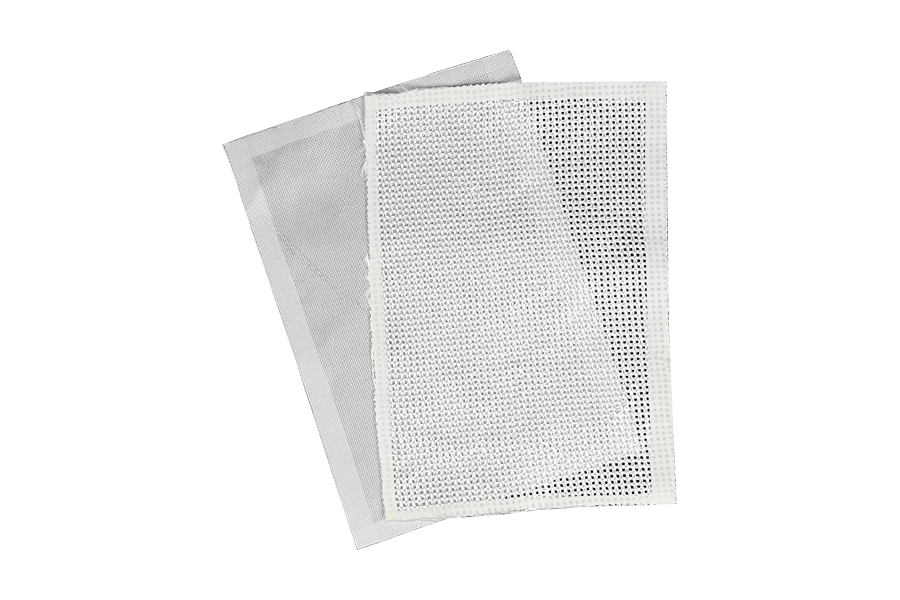
Plain weave (over-under every strand) gives maximum fiber stability. Used in thin fabrics (0.08-0.30mm) for PCB spacers and battery separators. Porosity is lowest among weaves, making it ideal for cleanroom barriers. However, it has minimal drape—rigidity index typically 85 on a 0-100 scale (100 = stiff).
Twill weave (e.g., 2/2, 4/4) introduces diagonal steps, improving tear strength by 40% compared to plain weave at equal weight. Thickness range 0.30-1.20mm. Preferred for heat blankets that must wrap around irregular valves or exhaust pipes. Data from ASTM D1424 shows twill fabrics achieve tear resistance of 65-90 N.
Satin weave (4-harness, 8-harness) floats fiber bundles over multiple strands, creating a smooth surface ideal for PTFE or silicone coating. Satin-woven Special Functional Fiberglass Fabric achieves coating adhesion pull-off values >3.5 MPa per ASTM D4541. Used for removable insulation pads and high-temperature conveyor belts. Minimum thickness starts at 0.8mm due to float length.
Performance Matching: Data-Driven Selection
To eliminate guesswork, use this three-factor decision matrix. Actual field data from 200+ installations across petrochemical and automotive plants.
| Requirement | Recommended Spec (weight/thickness/weave) | Validation Data |
| Continuous 450°C - 550°C exposure | 640 g/m² / 1.0 mm / 2/2 Twill | Shrinkage <2% after 1000h at 540°C |
| Arc flash protection (IEEE 1584) | 900 g/m² / 2.3 mm / Satin 8HS | ATPV 45 cal/cm², meets NFPA 70E |
| Acoustic damping (NRC >0.65) | 200 g/m² / 0.30 mm / Plain | 150-2000Hz absorption coefficient 0.68 |
| Molten metal splash (aluminum/brass) | 500 g/m² / 0.85 mm / Twill | No wet-through after 5 sec pour (700°C) |
| Low friction conveyor (coated side) | 600 g/m² / 0.95 mm / Satin 4HS | Dynamic COF 0.12 (PTFE coated) |
Industrial Applications: Where Special Functional Fiberglass Fabric Excels
Beyond generic "high-temperature" usage, Special Functional Fiberglass Fabric addresses niche challenges where metals or organic fabrics fail. Below are five proven application clusters with measurable ROI data.
1. Aerospace Fire Barriers (FAA FAR 25.853)
Both commercial and military aircraft use 250-400 g/m² plain weave fabric laminated with stainless steel foil. Weight savings over ceramic fiber: 62% per square meter. Flame penetration time exceeds 12 minutes at 1100°C flame, achieving zero after-flame per vertical burn test. Key adopters: engine nacelles, APU compartments, cargo liners.
2. Automotive Thermal Runaway Protection (EV battery packs)
EV manufacturers insert 0.8mm satin weave fabric between cell modules and the passenger cabin. Thermal conductivity 0.06 W/mK at 200°C. During nail penetration test (triggering thermal runaway), fabric surface temperature on cold side remains below 85°C for 10 minutes—sufficient for safe evacuation. Weight penalty: 720 g/m² adds only 1.2 kg per vehicle pack.
3. Welding Curtains and Spark Barriers
Heavy-duty twill (650 g/m², 1.15mm) meets OSHA 1910.252 requirements for welding screens. Unlike vinyl curtains, fiberglass does not melt or drip. In shop floor tests, arc flash from 400A MIG welder resulted in zero burn-through after 5000 hours of intermittent exposure. Translucent versions (plain weave, 280 g/m²) allow 15-20% light transmission while blocking UV-C radiation.
4. Insulation Jacketing for Steam Pipelines (ISO 15665 Class A)
Satin weave fabric (900 g/m², 2.5mm) coated with aluminum foil serves as the outer weather barrier for steam lines at 260°C. Service life exceeds 15 years without delamination—verified by 10-year field study at a Gulf Coast refinery. Energy savings: 18% lower heat loss compared to bare stainless steel jacketing due to lower emissivity (0.08 when coated).
5. Glass Laminating and Composite Tooling
Release-treated plain weave fabric (140 g/m², 0.2mm) used as a peel-ply layer in prepreg composite layup. Creates a textured surface for secondary bonding without sanding. Data from Boeing spec BMS 8-262: shear strength improvement 37% over standard nylon peel ply. Also used as bleeder fabric for excess resin uptake (absorption capacity 18ml per m²).
Cost vs. Performance: Economic Considerations
While Special Functional Fiberglass Fabric typically costs $4-15 per linear meter (1.5m width), the total cost of ownership is often lower than alternatives. Compare to ceramic fiber blanket: glass fabric installation time reduces by 50% because it can be cut with standard shears and sewn. Maintenance intervals for coated glass fabric: 24-36 months vs. 8-12 months for uncoated refractory fibers in dusty environments. For a typical industrial oven seal, switching from 2mm ceramic paper to 1.2mm twill glass fabric yields an annual savings of $7,800 per 30m of seal length (including lower replacement frequency).
How to Specify: A 5-Point Checklist
- Continuous operating temperature: Standard E-glass: 550°C, S-glass: 700°C. Do not exceed unless coated with refractory fillers.
- Mechanical load: For static insulation, 200-400 g/m² suffices. For movable curtains, 600+ g/m² twill required.
- Chemical exposure: Plain weave resists acid mists (hydrofluoric acid excluded). For alkalis, use surface-treated fabric (e.g., silane finish).
- Coating requirement: Vermiculite coatings for molten metal, PTFE for non-stick, silicone for flexible seals. Coating adds 50-200 g/m².
- Regulatory conformance: Check NFPA 701 (flame propagation), UL 94 V-0, or maritime standards (IMO A.754).
For custom requirements, Special Functional Fiberglass Fabric can be post-treated with acrylic binders, aluminum foil lamination, or edge reinforcement. Most mills offer cutting and hemming services to reduce end-user waste.
Bottom line: Match fabric weight to mechanical abrasion level, thickness to thermal gradient, and weave to coating or drape need. Start with plain weave for electrical or filtration, twill for flexible heat shields, satin for coated high-wear surfaces. Data from real-world cycles shows correct specification extends service life by 300-500% compared to off-the-shelf alternatives.